
The startup that wants to put a humanoid in every factory and maybe in every home
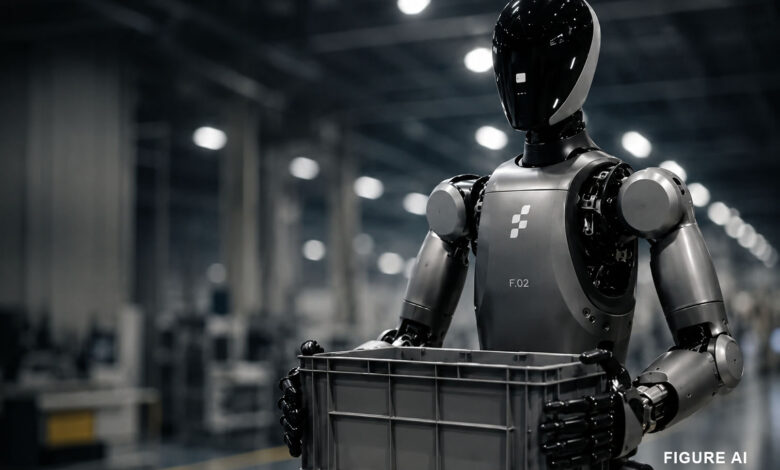
Three years ago, nobody knew Figure AI. Today, the startup is officially valued at $39 billion more than many publicly listed automakers, and more than any other humanoid robot manufacturer in the world. This valuation, reached in September 2025 during a Series C funding round of more than $1 billion, is already an event in the history of industrial robotics.
But behind the numbers, one question stands out: is Figure AI building something fundamentally new, or is it reproducing the hype cycle we have come to know with generative AI?
The honest answer is: probably both at once. And that is precisely what makes this company so fascinating to study.
From zero to $39 billion in three years: the journey
Brett Adcock is not a robotics engineer by training. He is a serial entrepreneur, founder of Vettery, a tech employment marketplace sold to Adecco, and Archer Aviation, an electric air taxi company. Two very different sectors, but one constant: long-cycle, capital-intensive markets where the race for resources matters above everything else.
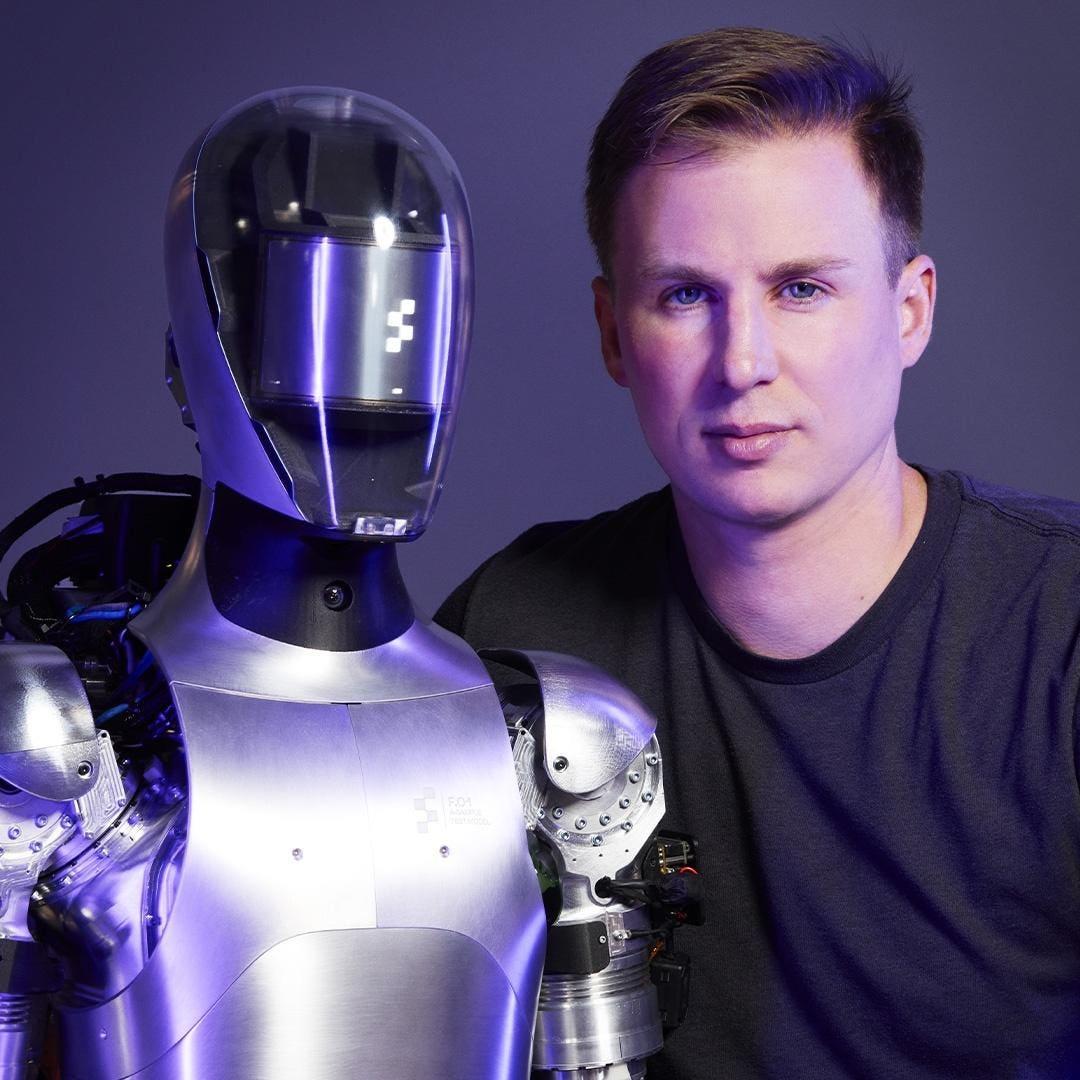
In 2022, he launched Figure AI with a simple and radical conviction: the global labor market is short of hands. Physical, repetitive and demanding tasks handling, logistics, industrial assembly are becoming increasingly difficult to fill in developed countries. A humanoid robot capable of performing these tasks without redesigning existing production lines would represent a market opportunity potentially larger than the automotive industry itself.
The bet quickly attracted some of the biggest names in tech. In 2024, Figure closed a $675 million Series B round at a valuation of $2.6 billion, with Microsoft, NVIDIA, the OpenAI Startup Fund, Jeff Bezos through Bezos Expeditions, Intel Capital and ARK Invest. The list of investors is almost as impressive as the machines themselves. In September 2025, an additional $1 billion Series C round brought the valuation to $39 billion, with Brookfield Asset Management and Macquarie Capital joining the table alternative asset managers that do not invest in science fiction.
In eighteen months, the valuation increased fifteenfold. That is rarely seen, even in tech. A new funding round is reportedly being prepared for 2026–2027.
Figure 01, Figure 02, Figure 03: three generations, one philosophy
Figure’s product trajectory is fast and methodical, which sets it apart from many robotics startups that produce demo after demo without ever leaving the laboratory.
Figure 01, was the founding prototype, presented in 2022. A bipedal robot measuring 1.67 meters and weighing 60 kilos, capable of walking and grasping objects. Not enough for a real production line, but enough to raise funds and demonstrate a direction.
Figure 02, launched in August 2024, represents the company’s first real industrial deployment. This was the robot sent to BMW’s assembly plant in Spartanburg, South Carolina and that is not a minor detail. For eleven months, Figure 02 worked ten-hour shifts, Monday to Friday, on a clearly defined task: loading sheet metal parts onto welding fixtures. In total, it completed more than 1,250 hours of real operation, loaded more than 90,000 parts, and reportedly contributed to the production of more than 30,000 BMW X3 vehicles.
That is the number that changes everything. You can manufacture beautiful laboratory videos. You cannot so easily manufacture 30,000 cars.
Figure 03, launched in October 2025, marks a philosophical turning point. The third generation is designed for two environments at once: industry, of course, but also the home. Soft exterior covering for safer human contact, wireless charging, redesigned audio interface, 44 degrees of freedom, tactile sensors capable of detecting forces from as little as three grams precise enough to handle an egg without breaking it.
On the hardware side, the wrist architecture was completely redesigned after BMW’s feedback: the motor controllers now communicate directly with the main computer, without an intermediate distribution board, improving reliability and simplifying thermal management. These are the details that distinguish an engineering robot from an industrial robot.
In March 2026, Figure released a video of Figure 03 autonomously tidying up a living room picking up toys, putting cushions back in place, wiping a table, restoring order. The movements are not fast. But they are continuous, natural, and the robot adapts to the changing layout of objects. This is no longer just a laboratory demonstration.

Helix is based on a logic close
to generative AI models: learning
massively through experience
Helix: the brain that makes all the difference
Figure’s hardware is solid. But what truly interests engineers, investors and competitors is Helix the AI model developed entirely in-house, which forms the central nervous system of all Figure robots.
Helix is a Vision-Language-Action model, or VLA. This type of architecture is at the heart of the new generation of intelligent robotics. In practical terms, the robot receives images from its cameras and instructions in natural language, and the model directly produces motor commands. No multi-step pipeline, no spatial segmentation followed by trajectory planning and then execution everything is integrated into a single neural network that sees, understands and acts.
What makes Helix particularly remarkable is that it runs onboard, without relying on the cloud. Figure 03 carries up to two NVIDIA GPUs per unit. Processing is local, eliminating the latency and connectivity issues that would penalize an industrial robot in a real environment.
Helix 02, presented in January 2026, extends this control to the robot’s entire body walking, manipulation, balance all driven by a single unified neural network. The living room demonstration is the direct consequence of this: the robot is not following a script. It observes its environment, identifies objects, plans and executes actions in real time.
This is what Brett Adcock calls the shift from the “programmed” robot to the “learning” robot. The difference is not cosmetic it is architectural. A programmed robot will only ever execute what it has been told to do. A robot driven by a sufficiently trained VLA can, in theory, approach a new task without reprogramming.
The challenge of scaling production: BotQ and Project Go-Big
Developing a humanoid robot capable of working in a factory is one thing. Manufacturing thousands then millions is another matter entirely. This is precisely where many robotics startups hit the wall: industrialization.
Figure anticipated this problem by building BotQ, its dedicated humanoid robot manufacturing facility. The production philosophy changed fundamentally between Figure 02 and Figure 03. While the previous generation relied on CNC machining for most mechanical parts precise but expensive Figure 03 is designed for die casting, plastic injection molding and stamping. These processes require heavier upfront investment, but they reduce unit costs as volumes increase. This is classic industrial logic: invest heavily in capex to reduce variable costs.
At the same time, “Project Go-Big” is a large-scale data collection initiative designed to feed Helix’s training. The more robots operate in real-world conditions, the more the model learns from varied situations, and the more capable it becomes. Field data is the scarce resource in humanoid robotics and Figure has understood that producing it at scale is a durable competitive advantage.
The real challenge in humanoid
robotics is no longer creating a
functional robot, but producing
it at scale
What Figure has not yet proven
An honest analysis of Figure AI must name the grey areas and they do exist.
The $39 billion valuation is built on potential, not on revenue. Figure’s current revenue remains limited. The BMW deployment is a pilot, not a mass-production contract. BMW and Figure are still evaluating additional use cases for Figure 03, and BMW’s March 2026 press release remains cautious about future commitments.
In June 2025, Brett Adcock declined to do a live demonstration at a major tech conference and refused to publicly answer detailed questions about the reality of the BMW partnership. This is not an alarming signal in itself startup CEOs often avoid uncontrolled demos but it is a useful reminder that the distance between a carefully controlled video and a stable industrial production line remains real.
The comparison with Tesla Optimus is inevitable and deserves to be taken seriously. Tesla is targeting a price range of $20,000 to $30,000 per unit, with ambitions to produce millions of units at scale. The Fremont factory, repurposed for Optimus, is already targeting 12,000 units per year in its initial phase. Figure has not announced a public price for Figure 03, nor a short-term production volume target. On this commercial and industrial front, Tesla has strengths that Figure has not yet demonstrated.
Chinese competition also deserves a mention one that too few Western articles take seriously. Around 90% of humanoid robots sold worldwide in 2025 were designed by Chinese companies, according to the International Federation of Robotics. UBTech, Unitree, Fourier Intelligence and XPeng operate with structurally different production costs. The price war in humanoid robots has not yet begun but it will come.
Who is the CEO of Figure AI?
Brett Adcock is an American entrepreneur specialized in breakthrough technologies and artificial intelligence. Before launching Figure AI in 2022, he had already co-founded Archer Aviation, a company developing electric flying taxis.
With Figure AI, Brett Adcock aims to create humanoid robots capable of working in factories, logistics warehouses and, eventually, homes. His stated goal is to develop a new generation of general-purpose robots capable of performing repetitive, physical or dangerous human tasks using artificial intelligence.
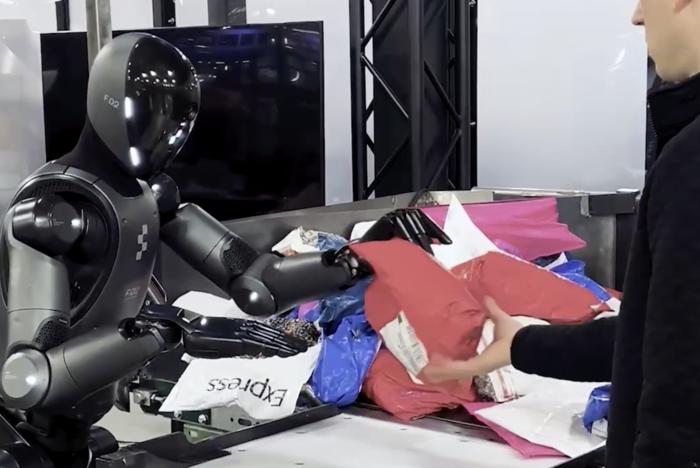
In just a few years, Figure AI has become one of the most closely watched startups in the humanoid robotics sector. The company is working on robots capable of sorting parcels, handling objects, cleaning spaces and assisting industrial operators. Several recent demonstrations have attracted millions of views online, particularly videos showing robots completing full autonomous logistics sorting shifts.
For many analysts, Figure AI is now among the most advanced companies in the global race for humanoid robots, alongside Tesla with Optimus and Agility Robotics.
What Figure AI says about the state of the sector
Figure AI is not an isolated story. It is the sign of a specific moment in the history of robotics.
For the first time, several technologies are maturing simultaneously: language models powerful enough to understand complex instructions, onboard GPUs compact enough to fit inside a robot torso, force and vision sensors precise enough for fine manipulation, and supply chains mature enough to make scaled production imaginable.
This was not true in 2015. It was not really true in 2020 either. In 2025–2026, the conditions are coming together for humanoid robots to move from the laboratory to the factory. Figure AI is one of the companies making that transition tangible.
For industrial leaders reading these lines, the question is not yet: “Should I buy a Figure robot?” It is: “Should I follow this technology closely, understand its real capabilities, and prepare for possible integration over the next three to five years?”
The answer to that question is yes with the caution required for any long-term bet on a technology still under development, but also with the attention that a true paradigm shift deserves when it begins to happen.
Robot Magazine follows the evolution of industrial humanoid robotics. Figure AI, Optimus, Boston Dynamics Atlas: the field is taking shape quickly. Next article in this series: the technical showdown of industrial humanoids in 2026.
2. Why is Figure AI attracting so much investor attention?
Figure AI has become one of the most highly valued humanoid robotics startups in the world, reaching an estimated valuation of $39 billion after its 2025 funding round. Investors believe humanoid robots could become a massive market tied to industrial automation, logistics, and service industries.
3. Which major companies and investors support Figure AI?
The company is backed by major technology and investment players including Microsoft, NVIDIA, the startup fund of OpenAI, Jeff Bezos through Bezos Expeditions, as well as firms like ARK Invest and Intel Capital.
4. What is the difference between Figure 01, Figure 02, and Figure 03?
Figure 01 was the company’s first humanoid prototype introduced in 2022. Figure 02 became the first generation deployed in a real industrial environment, including tests with BMW. Figure 03 represents a broader evolution toward both industrial and domestic applications.
5. What is Helix in Figure AI’s robots?
Helix is Figure AI’s internal artificial intelligence system. It is a Vision-Language-Action (VLA) model capable of converting camera input and natural language instructions directly into robotic actions. This allows the robots to understand and perform tasks without traditional hard-coded programming.
6. Is Figure AI competing with Tesla Optimus?
Yes. Figure AI is considered one of the main competitors to Tesla in the global humanoid robot race. Both companies aim to develop robots capable of automating physical work in factories, logistics, and potentially household environments.
7. Are humanoid robots already being used in real-world operations?
Yes, but on a limited scale. Figure AI has already tested its robots inside BMW factories for repetitive industrial tasks. However, the humanoid robotics market is still in an early deployment phase and large-scale adoption has not yet happened.
8. Why is China important in the humanoid robot industry?
China has become a major force in humanoid robotics thanks to companies such as UBTech, Unitree, and Fourier Intelligence. The country benefits from strong manufacturing capabilities, advanced electronics supply chains, battery expertise, and large-scale production capacity.
9. What are the biggest challenges facing humanoid robots today?
Key challenges include energy autonomy, balance, precise object manipulation, safety, environmental understanding, and cost-effective mass production. Despite rapid progress, humanoid robots are still far from widespread everyday deployment.