
VivaTech 2026: The Year Humanoid Robots became an industrial reality
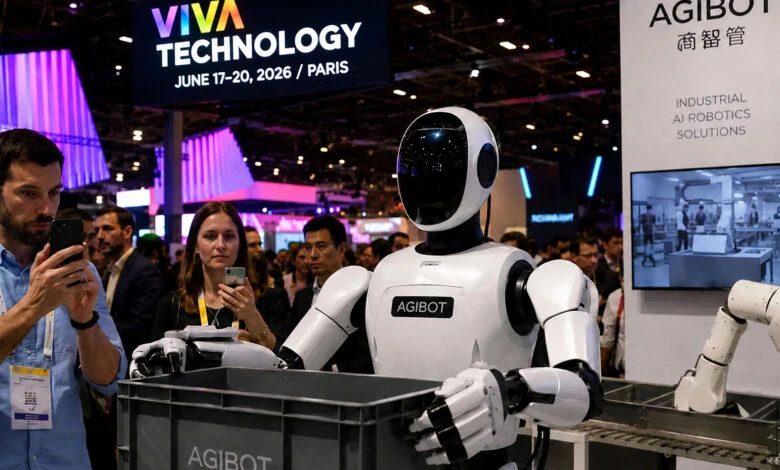
Paris, Porte de Versailles. For its tenth anniversary, VivaTech 2026 did not merely celebrate the rise of artificial intelligence. Above all, the event confirmed a trend that is accelerating around the world: robotics is entering a new phase of maturity. During the days of June 17 and 18, visitors were able to observe dozens of demonstrations of robots capable of walking, handling objects, interacting with humans and performing tasks once reserved for operators.
Long confined to research laboratories or spectacular promotional videos, humanoid robots now seem ready to take a decisive step: their integration into professional environments.
AI leaves Screens to enter the Physical World
Since the arrival of ChatGPT in 2022, artificial intelligence has mainly been associated with software, virtual assistants and content generation. But at VivaTech 2026, attention shifted toward a new category of technologies: “Embodied AI,” or embodied artificial intelligence.
The idea is simple: to combine the reasoning capabilities of AI models with robotic bodies capable of acting in the real world.
This convergence between artificial intelligence and robotics is probably one of the most important technological developments of the decade. Robots are no longer programmed solely to repeat predefined movements. They are now learning to understand their environment, adapt to unexpected situations and collaborate with humans.
For many observers present in Paris, this evolution recalls the beginnings of personal computing in the 1980s or the arrival of the smartphone in the late 2000s.
KANGAROO, a European Showcase for Advanced Robotics
Among the most notable demonstrations was KANGAROO, the robot developed by PAL Robotics in partnership with several European research centers.
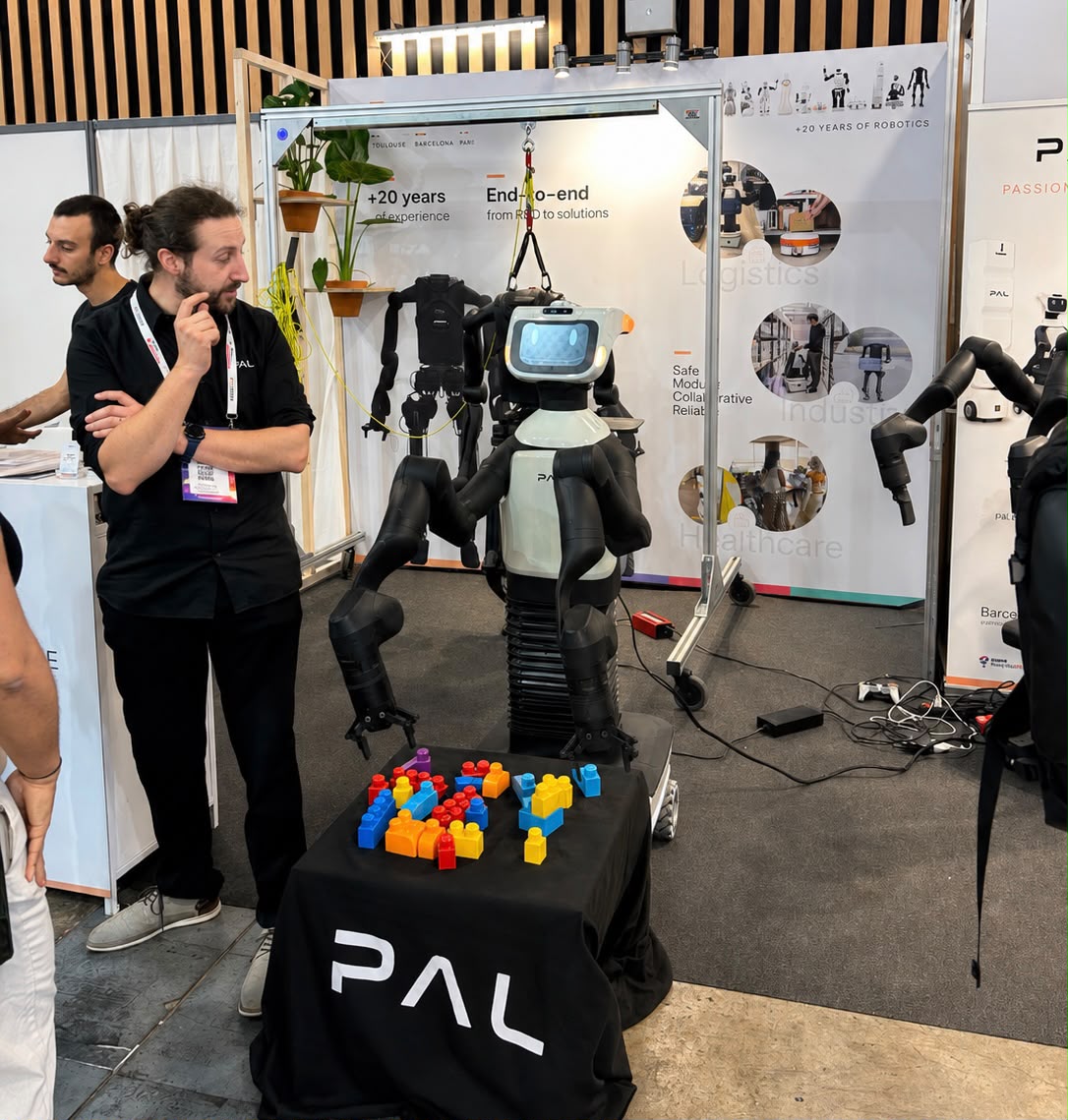
Equipped with advanced mobility and reinforcement learning-based capabilities, KANGAROO represents Europe’s determination to remain competitive in the global humanoid robotics race.
Unlike some highly publicized demonstrations from Asia or the United States, the European approach appears more pragmatic. The goal is not only to build a spectacular robot, but to develop a platform capable of being used in industrial, logistics or scientific environments.
This presence also served as a reminder that Europe still has recognized expertise in industrial robotics, automation and artificial intelligence research.

At VivaTech 2026, one thing became clear:
AI no longer wants only to understand the world.
It now wants to act in the physical world.
China accelerates and sets the Pace
If there is one major lesson to take from this edition, it is undoubtedly the rise of Chinese players.
While China already largely dominated global industrial robot production, it is now investing massively in humanoid robots.
Several Chinese companies used VivaTech to demonstrate their progress in Embodied AI. Their objective is ambitious: to produce versatile robots capable of carrying out a wide variety of tasks in factories, warehouses and logistics centers.
This strategy is part of a long-term national industrial policy. Beijing now considers robotics to be a strategic sector, on the same level as semiconductors or artificial intelligence.
For European industrial players present at the event, the conclusion is clear: competition is no longer based solely on robot quality, but also on the ability to produce at scale and rapidly reduce costs.
Robots leave the laboratories
One of the major differences between VivaTech 2026 and previous editions lies in the maturity of the demonstrations presented.
Just a few years ago, visitors mainly discovered experimental prototypes or futuristic concepts.
This year, the use cases were much more concrete.
The robots presented were designed to:
- Assist operators in warehouses;
- Handle heavy loads;
- Perform repetitive tasks;
- Take part in industrial maintenance;
- Improve logistics operations;
- Support certain hospital activities.
This evolution reflects a paradigm shift. Companies are no longer simply trying to impress investors. They are now seeking to demonstrate the economic value of their solutions.
Return on investment is becoming just as important an argument as technological performance.
The challenge of labor shortages
Another topic widely discussed in the aisles of the event was the global shortage of skilled workers.
Many industrial sectors are struggling to recruit enough operators, technicians or material handlers. This situation is particularly visible in Europe, where demographic ageing is increasing pressure on the labor market.
For several manufacturers, humanoid robots could provide a partial response to this challenge.
The objective is not necessarily to replace human workers, but to automate certain difficult, repetitive or dangerous tasks.
This approach explains why the first markets targeted by humanoid robot manufacturers are mainly logistics, industry and critical infrastructure.
France wants to take its place
Faced with massive investments from the United States and China, France is also trying to strengthen its position.
Companies such as Mirokaï, Wandercraft and several research laboratories supported by the CNRS used VivaTech as a showcase for their expertise.
The message is clear: France wants to actively participate in building the next generation of intelligent robots.
This ambition is part of a broader dynamic of reindustrialization and European technological sovereignty.
Because behind the spectacular demonstrations lies a major economic challenge. According to several analysis firms, the global humanoid robotics market could represent several hundred billion dollars over the coming decades.
The United States dominates AI. China is accelerating industrialization. Europe is relying on its scientific
and industrial expertise.
A Revolution comparable to the arrival of the PC?
For some experts present at VivaTech, humanoid robotics could follow a trajectory similar to that of personal computers.
The first models remain expensive and relatively limited. But rapid advances in artificial intelligence, batteries, sensors and mechanical systems suggest that costs will gradually decline.
As prices fall, use cases should multiply.
Companies experimenting with these technologies today could therefore gain a significant competitive advantage in the years ahead.
Toward a new Robotic economy
VivaTech 2026 will probably be remembered as a turning point for robotics.
The event showed that humanoid robots are no longer mere technological curiosities. They are gradually becoming industrial tools capable of addressing very concrete challenges: labor shortages, productivity, safety and competitiveness.
The global race is now underway.
The United States has powerful players backed by AI giants. China is accelerating thanks to its industrial capacity. Europe is trying to preserve its position through its scientific and industrial expertise.
One thing is certain: the robots seen in the aisles of VivaTech probably represent only a glimpse of what awaits companies over the next decade.
The question is no longer whether humanoid robots will become part of our professional daily lives.
The real question is now which countries and which companies will succeed in taking the lead in this new industrial revolution.
2. What is “Embodied AI”?
Embodied AI refers to the combination of artificial intelligence with physical robotic systems. Instead of existing only as software, AI is integrated into machines that can perceive, move, and interact with the real world.
3. Why are humanoid robots attracting so much attention?
Humanoid robots are designed to operate in environments originally built for humans. Their ability to perform a wide variety of tasks makes them attractive for industries facing labor shortages, productivity challenges, and increasing automation needs.
4. Which industries are expected to adopt humanoid robots first?
The most promising sectors include manufacturing, logistics, warehouse operations, infrastructure maintenance, healthcare support, and other environments where repetitive, physically demanding, or hazardous tasks are common.
5. Why is China becoming a major player in humanoid robotics?
China is investing heavily in robotics as part of its long-term industrial strategy. Beyond technological innovation, Chinese companies benefit from large-scale manufacturing capabilities, integrated supply chains, and the ability to rapidly reduce production costs.
6. What role does Europe play in the global humanoid robotics race?
Europe remains a strong player thanks to its expertise in industrial automation, robotics, engineering, and artificial intelligence research. Companies and research organizations across the continent are working to develop practical and commercially viable humanoid robotics solutions.
7. Could humanoid robots become as common as personal computers?
Many experts believe humanoid robots could follow a trajectory similar to personal computers or smartphones. As technology improves and costs decrease, adoption could accelerate, creating a new robotic economy across industries and eventually expanding into broader commercial and consumer applications.