
Robotics: When an AI Error becomes a Physical Risk
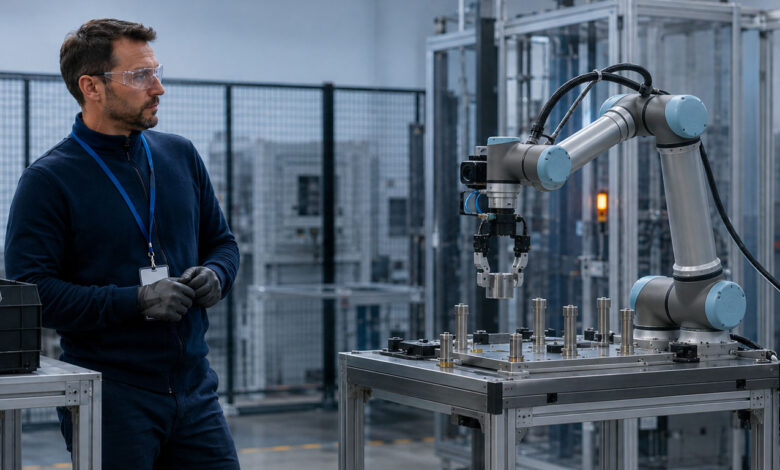
The Physical AI risk we need to anticipate
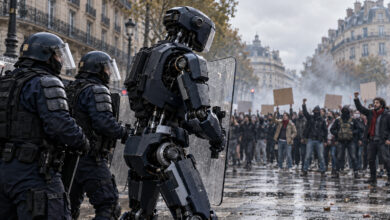
A study published in 2025 examining 303 accidents involving human–robot interactions notably highlights unexpected robot activations and sensor errors. With the emergence of Physical AI, artificial intelligence errors are gradually moving beyond screens and entering the physical world.
For several years, we have grown accustomed to artificial intelligence making mistakes.
A chatbot invents information. An image generator produces an anomaly. A model misinterprets a document.
In most cases, the error remains digital.
With Physical AI, this situation changes radically
When artificial intelligence controls a robotic arm, a mobile robot or, in the future, a humanoid robot, a misinterpretation of its surroundings can trigger a real physical action.
An error of just a few centimetres can have consequences far more serious than a ChatGPT hallucination.
303 accidents analysed
A study published in 2025 in the scientific journal Safety Science analysed 303 accident reports involving interactions between humans and robots.
The researchers identified seven major categories of incidents.
Two phenomena stand out in particular: unexpected robot activations and sensor-related errors.
This is precisely one of the challenges that Physical AI will need to address.
A robot must perceive its environment before it can act.
Cameras, proximity sensors, vision systems, contextual data and artificial intelligence models become its eyes and, to some extent, its decision-making system.
But what happens when that perception is incorrect?
A wrong decision becomes a physical movement
Consider an extremely simple scenario.
A robot equipped with a camera must identify a crate and move it.
Its vision system misinterprets the scene.
The software nevertheless decides that it has identified the correct object.
In a conventional computer system, this error might produce incorrect data.
In a robot, it can potentially produce an incorrect physical movement.
If an operator is standing in its path, the algorithmic error becomes a safety issue.

With Physical AI, an artificial intelligence
error no longer produces only an incorrect
answer. It can produce a physical
movement.
Accidents are already a reality
Data from the United States provide a tangible measure of this risk.
In its report on workplace accidents in the manufacturing industry, the US Occupational Safety and Health Administration identified 550 incidents involving robots.
In 33% of cases, the victims were treated in emergency departments, while 2% of incidents required hospitalisation.
Reported injuries included cuts, bruises and fractures.
Robot maintenance and cleaning also appear to be particularly sensitive situations.
Of course, not all these accidents can be attributed to artificial intelligence.
That distinction is essential.
However, they demonstrate what can happen when humans and machines capable of powerful movements share the same environment.
Physical AI is now adding a new variable: the machine’s decision-making autonomy.
From software bug to physical risk
This is probably one of the major changes that the robotics industry will need to address in the coming years.
Conventional software follows relatively deterministic logic.
New generations of robots will be increasingly capable of interpreting their surroundings, adapting their actions and making certain decisions in real time.
This capability is precisely what makes them valuable.
But it also creates a new problem.
How can we guarantee the safety of a machine when not all of its decisions can be predicted in advance?
The question becomes even more important with humanoid robots.
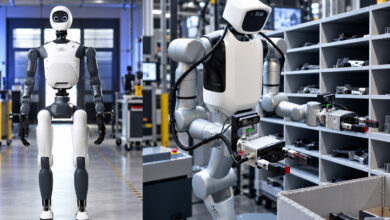
Unlike industrial robots, which have traditionally operated behind safety barriers, humanoid robots are specifically designed to work in environments created for humans.
- Factories
- Warehouses
- Hospitals
- Shops
- And potentially, in the future, our homes
Robot errors are becoming a new KPI
Until now, manufacturers have mainly measured availability, productivity, breakdowns and accidents.
Physical AI could introduce a new indicator:
the number of incorrect decisions made by a robot before they result in an incident.
A robot operating for 1,000 hours without an accident may appear extremely reliable.
But if an operator had to intervene 30 times to prevent an incorrect action, the risk assessment becomes very different.
These “near misses” could become an essential metric for assessing the true reliability of autonomous robots.
Accidents tell us what went wrong.
Near misses could show us what may
go wrong tomorrow.
Data remains insufficient to anticipate the risk
The problem is that organisations do not yet have a common language for measuring these situations.
An emergency stop, a trajectory corrected by an operator, an incorrect detection or a collision avoided by only a few centimetres are not always recorded in the same way.
Yet these events could provide the most useful warning signs before an accident occurs.
For example, a robot recording zero accidents over 1,000 operating hours does not present the same level of risk if it required zero, 10 or 30 human interventions to prevent a dangerous action.
The next generation of indicators will therefore probably need to distinguish between:
- Accidents resulting in injury
- Property damage
- Emergency stops
- Perception errors
- Unexpected activations
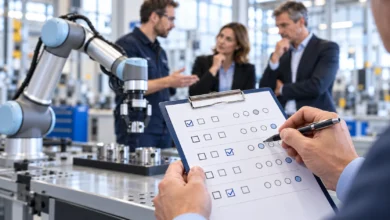
- Preventive human interventions
- Near misses with no consequences
Without this level of detail, companies risk underestimating the true danger posed by systems that appear to be functioning correctly.
The next battle for Physical AI may be about trust
Robot performance is advancing rapidly.
But if millions of autonomous machines are to work alongside humans every day, their intelligence will need to be more than just efficient.
It will need to be predictable, controllable and capable of failing without putting people at risk.
Artificial intelligence introduced us to a new category of error: hallucinations.
Physical AI now confronts us with a much more tangible question: what happens when a hallucination becomes a physical movement?
Anticipating the risk before the first major accident
The question is no longer whether autonomous robots will make mistakes.
They will.
The real question is whether we will be able to detect those errors early enough to prevent them from becoming accidents.
How should near misses be recorded? What thresholds should trigger a shutdown or a system reassessment? How can an AI model be tested in unpredictable physical environments? Who should be held responsible when an autonomous decision causes harm?
These issues already concern manufacturers, robotics integrators, safety managers, insurers, researchers and regulators.
At Robot Magazine, we want to open this discussion with the organisations and experts developing, deploying and regulating Physical AI.
If you work on autonomous robot safety, near-miss detection, embedded AI system certification or the prevention of human–robot risks, please contact us.
Together, we can begin defining the methods, indicators and best practices needed to anticipate this future challenge before it becomes a crisis.
2. Why do AI errors become more critical in robotics?
In a digital system, a misinterpretation generally produces incorrect information. In a robot, the same error can trigger a physical movement, such as an incorrect trajectory, the manipulation of the wrong object or an unexpected movement near an operator.
3. What types of incidents can occur during human–robot interactions?
Incidents may include unexpected activations, sensor errors, collisions, incorrect movements or hazardous situations during maintenance and cleaning. As robots become more autonomous, perception and decision-making errors are also becoming important factors to monitor.
4. What is a near miss in robotics?
A near miss is a situation in which a potentially dangerous action ultimately causes neither injury nor damage, for example because an operator intervenes, an emergency stop is triggered or a collision is narrowly avoided. These events can provide valuable information about potential risks before an actual accident occurs.
5. Which indicators should be monitored when using autonomous robots?
In addition to the number of accidents, manufacturers could monitor property damage, emergency stops, perception errors, unexpected activations, preventive human interventions and near misses. This data would enable a more accurate assessment of a robotic system’s true reliability.
6. Why do humanoid robots make this issue particularly important?
Humanoid robots are designed to operate in environments originally created for humans, including factories, warehouses, hospitals, shops and potentially homes. Their proximity to people therefore increases the importance of systems capable of detecting errors and failing safely.
7. What will be the main safety challenge for Physical AI?
The challenge will be to make autonomous robots not only efficient, but also predictable, controllable and safe when they make mistakes. In particular, the industry will need to develop better near-miss indicators and methods for evaluating robot decisions before an error results in an accident.