
EcoStruxure: The Platform that connects Robots and Factories
The global industry is entering a new era. Robotics, artificial intelligence, the Industrial Internet of Things (IIoT), and data analytics are profoundly transforming production methods. In this context, companies are seeking to build factories capable of producing more efficiently, with greater flexibility and optimized energy consumption.
According to the International Federation of Robotics, more than 4.2 million industrial robots are currently in operation in factories worldwide, and over 540,000 new robots are installed each year. This rapid growth in robotization requires technological infrastructures capable of connecting machines, robots, and IT systems.
It is precisely in this environment that the EcoStruxure platform, developed by Schneider Electric, plays a key role. Designed to support the digital transformation of industry, EcoStruxure enables the connection of industrial equipment, the collection of production data, and the optimization of factory performance.
In a world where industrial competitiveness increasingly depends on the ability to leverage data and automation, this platform is becoming a central element of smart factories.
The rise of smart factories
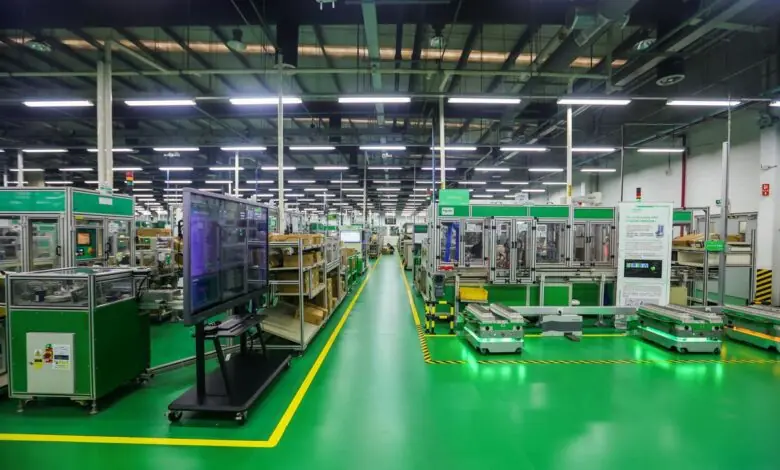
Smart factories represent one of the major evolutions of modern industry. Unlike traditional production lines, these infrastructures rely on interconnected systems capable of communicating with each other and making data-driven decisions.
In a smart factory, robots, sensors, machines, and IT systems are connected to a digital platform that enables real-time monitoring of all industrial operations.
This approach offers several advantages:
-
Improved productivity
-
Reduced operational costs
-
Predictive maintenance of equipment
-
Optimized energy consumption
-
Better production quality
According to several studies by McKinsey, the use of digital technologies in industry can improve factory productivity by 20 to 30% while reducing maintenance costs by up to 40%.
To achieve these objectives, companies must rely on platforms capable of connecting and orchestrating all their industrial equipment.

The global industry is entering
a new era driven by data and
automation.
EcoStruxure: an open architecture for industry
EcoStruxure is the industrial platform developed by Schneider Electric to address the challenges of Industry 4.0. It is based on an open architecture that enables the connection of different types of equipment and software.
This platform is built on three technological layers.
Connected products
The first level concerns the physical equipment present in the factory, including:
-
Industrial sensors
-
Programmable logic controllers (PLCs)
-
Variable speed drives
-
Motor control systems
-
Energy management devices
These devices are capable of collecting data on machine operations, energy consumption, and production performance.
System control
The second level involves automation systems that control machines and coordinate industrial operations.
Automation software enables:
-
Control of industrial robots
-
Synchronization of production lines
-
Automation of complex tasks
-
Real-time supervision of operations
This technological layer forms the operational core of the smart factory.
Applications and analytics
The third level is dedicated to data utilization. The information collected by machines is analyzed to improve industrial performance.
EcoStruxure applications enable:
-
Industrial data analysis
-
Predictive maintenance
-
Energy optimization
-
Industrial performance management
This ability to transform data into actionable insights is one of the key strengths of modern industrial platforms.
Integration of industrial robotics
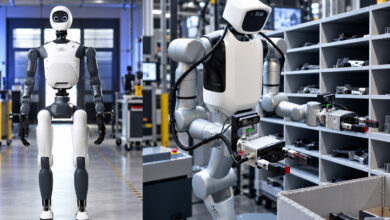
In modern factories, industrial robots play a central role in production processes. They perform repetitive tasks with high precision and speed.
Robots are now used in many industrial applications:
-
Assembly
-
Welding
-
Material handling
-
Pick and place
-
Quality control
-
Packaging
However, these robots must be integrated into a global system to ensure effective coordination with the rest of the production line.
EcoStruxure enables industrial robots to be connected to automation systems and supervisory platforms. This integration offers several advantages:
-
Better visibility into robot performance
-
Reduced downtime
-
Optimization of production flows
-
Predictive maintenance of equipment
Thanks to this approach, manufacturers can fully leverage the potential of robotics while improving the reliability of their installations.
Smart energy management
One of the major challenges of modern industry is energy consumption. Robotized and automated factories often consume large amounts of energy, which can significantly impact operating costs.
Schneider Electric, historically specialized in energy management, has integrated this dimension at the core of the EcoStruxure platform.
The proposed solutions enable:
-
Measurement of machine energy consumption
-
Identification of waste sources
-
Optimization of equipment energy efficiency
-
Reduction of factory carbon footprint
In a context where companies aim to meet sustainability goals, this ability to optimize energy management becomes a strategic advantage.
Industrial platforms are
becoming strategic
infrastructures.
Global adoption across multiple sectors
EcoStruxure solutions are now used across many industrial sectors, including:
-
Automotive
-
Electronics
-
Food processing
-
Logistics
-
Pharmaceutical industry
-
Energy production
In these environments, companies must manage complex infrastructures involving hundreds of machines and robots. Digital platforms make it possible to centralize information and improve decision-making.
This digital transformation is part of a broader movement toward the digitization of production chains.
The future of industry: robotics, AI, and data
The industry of the future will rely on the integration of several complementary technologies.
Among the most important trends:
-
Advanced robotics
-
Collaborative robots (cobots)
-
Industrial artificial intelligence
-
Digital twins
-
Real-time data analytics
According to analysts at ABI Research, the global robotics market could exceed $110 billion by 2030.
Industrial platforms like EcoStruxure will play a central role in this transformation, as they enable these technologies to be connected within a coherent infrastructure.
In the long term, factories could become increasingly autonomous, capable of optimizing their production and automatically adapting to changes in demand.
Industrial robotization can no longer be considered without a digital infrastructure capable of connecting machines, robots, and information systems.
With EcoStruxure, Schneider Electric offers a platform that enables companies to build smart, connected, and more sustainable factories.
By combining industrial automation, energy management, and data analytics, this solution helps lay the foundations for the industry of the future.
As digital transformation continues to redefine production chains on a global scale, platforms capable of orchestrating these technologies will play a decisive role in the competitiveness of industrial companies.
FAQ – EcoStruxure, industrial automation, and smart factories
2. How does EcoStruxure support smart factories?
EcoStruxure enables real-time monitoring of machines, robots, and production systems. By integrating connected devices, automation systems, and data analytics, it improves productivity, reduces downtime, and enhances overall operational efficiency.
3. What are the main technology layers of EcoStruxure?
EcoStruxure is built on three main layers: connected products such as sensors and PLCs, control and automation systems, and applications with advanced analytics. Together, these layers form a comprehensive industrial digital architecture.
4. How does EcoStruxure integrate industrial robotics?
The platform connects industrial robots to automation and supervisory systems. This integration improves performance visibility, enables predictive maintenance, reduces production stoppages, and optimizes workflow coordination.
5. Why is energy management important in automated factories?
Modern automated factories consume significant amounts of energy. EcoStruxure includes intelligent energy management solutions that monitor consumption, identify inefficiencies, optimize equipment performance, and help reduce environmental impact.
6. In which industries is EcoStruxure used?
EcoStruxure solutions are deployed across industries such as automotive, electronics, food and beverage, logistics, pharmaceuticals, and energy production. These sectors rely on centralized data platforms to manage complex industrial infrastructures.
7. What role will data and artificial intelligence play in the future of industry?
The future of industry will rely on advanced robotics, artificial intelligence, digital twins, and real-time data analytics. Platforms like EcoStruxure provide the infrastructure needed to connect these technologies and enable smarter, more autonomous factories.