
FANUC highlights flexible automation and physical AI
From March 30 to April 2, 2026, the Global Industrie trade show will return to Paris-Nord Villepinte, bringing together all industrial players around the major transformations shaping the sector. On this occasion, FANUC will showcase several innovations at its booth (Hall 5 – F161), illustrating current developments in industrial robotics, including equipment flexibility, process digitalization, and the growing integration of artificial intelligence.
More mobile and adaptable Robots for production needs
In a context where industrial cycles are shortening and production variability is increasing, FANUC is highlighting a new generation of robots designed to quickly adapt to production environments.
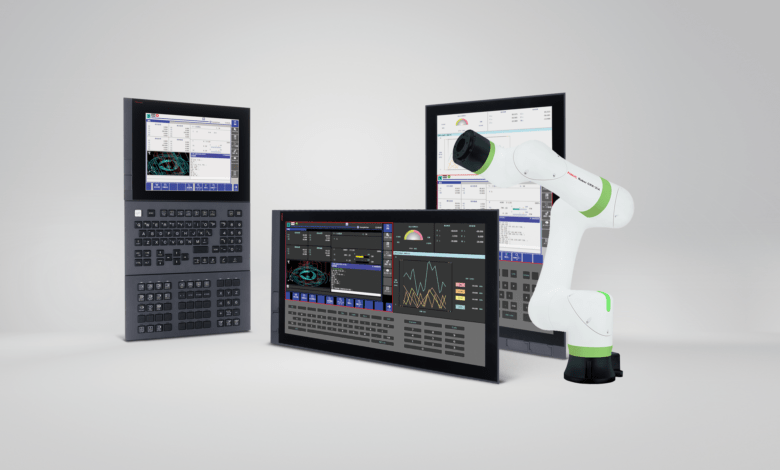
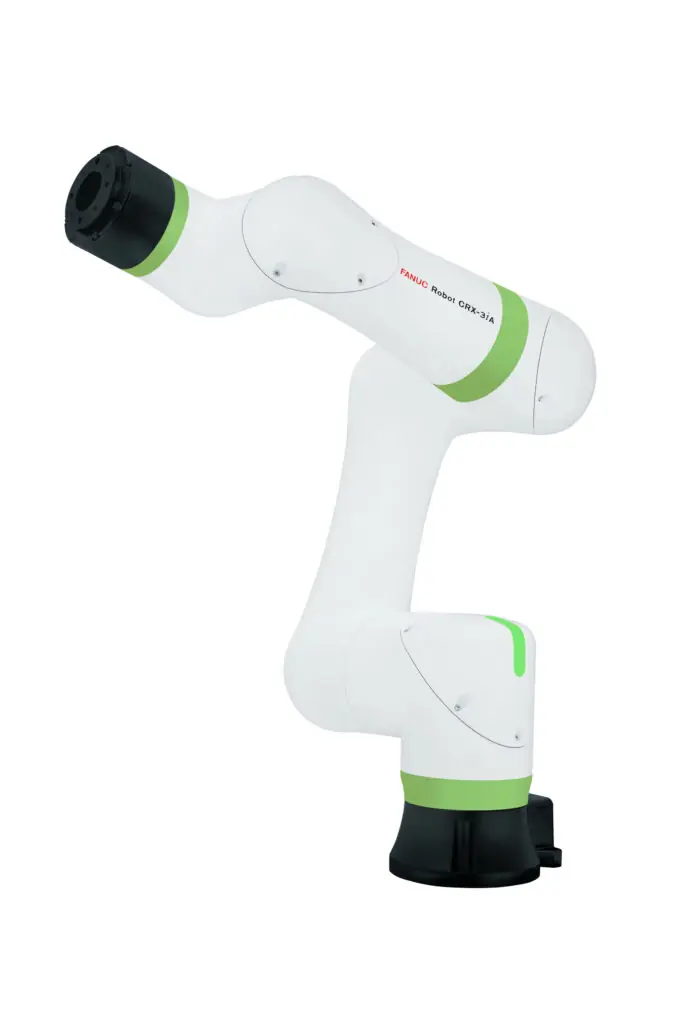
Among the new releases, the collaborative robot CRX-3iA stands out for its lightweight design (11 kg), making it easy to move across the factory to support various tasks, from quality control to assembly. On the other hand, models such as the CRX-30iA are evolving through software optimizations, enabling, for example, an increase in payload capacity up to 40 kg in palletizing mode.
This modular and scalable approach reflects a strong market trend: equipment capable of continuously adapting to operational constraints without requiring heavy investments for each production line modification.
Teleoperation and Haptic feedback for High-Risk environments
Another notable development is the introduction of teleoperation features on certain robotic arms. Which can now be remotely controlled via a master-slave system. Operators can guide a robot from a distance using a “leader” mini-robot while benefiting from haptic feedback.
This technology is primarily aimed at high-risk or demanding environments (heavy handling, hazardous conditions, musculoskeletal disorders), allowing the precision of human gestures to be maintained while reducing operators’ physical exposure.
Advanced simulation and convergence with Physical AI
Industrial simulation is also reaching a new milestone with the integration of FANUC robots into the NVIDIA Isaac Sim environment. This platform enables the creation of digital twins of factories to test and optimize production processes before real-world deployment.
Integration with the Roboguide software ensures consistency between simulation and execution, enhancing the reliability of virtual testing.
At the same time, FANUC is introducing several features to facilitate the integration of AI into robotic systems:
-
Compatibility with ROS2 for equipment interoperability
-
Real-time trajectory adaptation through streaming motion
-
Python programming directly from the controller
These developments are part of the rise of “physical AI,” which aims to equip robots with the ability to interact with unstructured environments. Opening the door to new industrial applications.
A CNC designed for connected environments
In the field of machining, the new FS500i-A CNC highlights the convergence between industrial performance and connectivity. Designed to meet the requirements of complex parts generated through AI-assisted design. It integrates advanced computing capabilities along with extended connectivity.
The integration of multiple communication protocols and enhanced cybersecurity standards enables better coordination between machines, robots, and digital systems. Particularly in a changing European regulatory environment.
Toward more versatile Industrial Machines
Finally, FANUC continues to develop industrial machines capable of covering a wide range of applications. The goal: to provide greater flexibility for manufacturers while optimizing the use of space and resources.
The Roboshot S180 C injection molding machine illustrates this approach. With the ability to accommodate larger molds without increasing its footprint, while simplifying plug-and-play robot integration.
A key event for a Transforming Industry
With these innovations, FANUC highlights several structuring trends in the industry: flexible production tools, process digitalization, and the convergence of robotics and artificial intelligence.
Global Industrie 2026 is shaping up to be a strategic meeting point for industry players looking to anticipate sector transformations and discover the technologies that will shape the factory of tomorrow.
📍 Global Industrie 2026
📅 March 30 – April 2, 2026
📌 Paris-Nord Villepinte
🏢 FANUC – Hall 5, Stand F161
FAQ – FANUC Innovations at Global Industrie 2026
2. How does EcoStruxure support smart factories?
EcoStruxure enables real-time monitoring of machines, robots, and production systems. By integrating connected devices, automation systems, and data analytics, it improves productivity, reduces downtime, and enhances overall operational efficiency.
3. What are the main technology layers of EcoStruxure?
EcoStruxure is built on three main layers: connected products such as sensors and PLCs, control and automation systems, and applications with advanced analytics. Together, these layers form a comprehensive industrial digital architecture.
4. How does EcoStruxure integrate industrial robotics?
The platform connects industrial robots to automation and supervisory systems. This integration improves performance visibility, enables predictive maintenance, reduces production stoppages, and optimizes workflow coordination.
5. Why is energy management important in automated factories?
Modern automated factories consume significant amounts of energy. EcoStruxure includes intelligent energy management solutions that monitor consumption, identify inefficiencies, optimize equipment performance, and help reduce environmental impact.
6. In which industries is EcoStruxure used?
EcoStruxure solutions are deployed across industries such as automotive, electronics, food and beverage, logistics, pharmaceuticals, and energy production. These sectors rely on centralized data platforms to manage complex industrial infrastructures.
7. What role will data and artificial intelligence play in the future of industry?
The future of industry will rely on advanced robotics, artificial intelligence, digital twins, and real-time data analytics. Platforms like EcoStruxure provide the infrastructure needed to connect these technologies and enable smarter, more autonomous factories.