
Automated Palletizing: How Liebherr boosts productivity
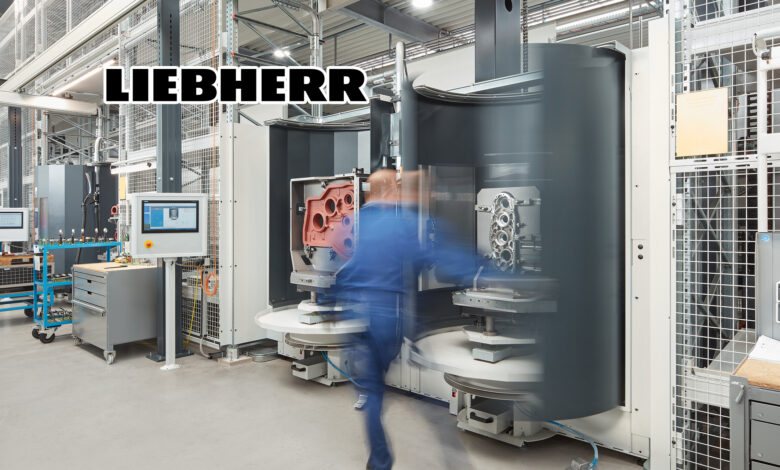
Industrial Automation: Liebherr strengthens its palletizing offering with modular and scalable solutions
At a time when optimizing production lines is becoming a strategic priority for manufacturers, Liebherr-Verzahntechnik GmbH has unveiled, through a recent press release, a range of palletizing solutions designed to meet increasingly diverse industrial needs. From small production runs to complex manufacturing environments, the German industrial group highlights a practical and scalable approach to automation.
A legacy of innovation
At Liebherr, automation is not just a product, but the result of a deeply rooted engineering culture. The legacy of Hans Liebherr, founder of the group, is reflected in the company’s ability to design in-house solutions where the market falls short. It was precisely this philosophy that led to the development of the PHS Pro pallet handling system in 2008.
At the time, faced with a lack of suitable solutions for its own industrial needs, the company chose to develop its own system. The result was a complete automation solution capable of adapting to complex industrial environments while remaining scalable.

Automation is becoming a
strategic lever for optimizing
production lines.
From custom-made to modular
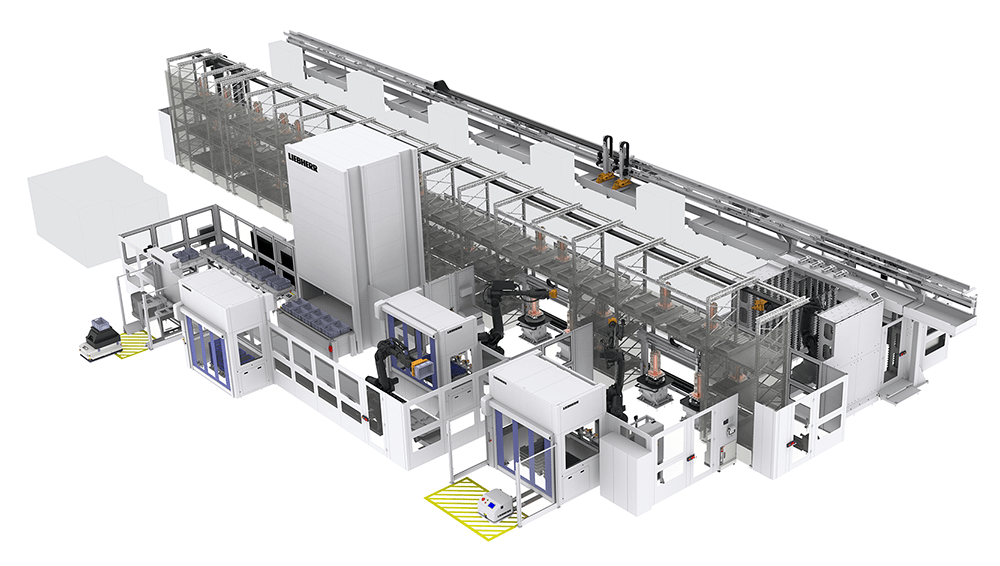
Building on its success, the PHS Pro evolved into the PHS Allround, a modular version designed to make automation more accessible. This system is particularly suited to companies with limited space or those wishing to invest progressively.
The PHS Allround stands out through its standardized modular design, allowing step-by-step expansion. Available in several configurations, it offers options such as front machine access, double-fork systems, and extended travel distances for loading.
This modularity is a major advantage for industrial SMEs, which can integrate automation solutions without compromising their ability to adapt in the future.
Significant performance gains
Beyond flexibility, Liebherr’s palletizing solutions deliver notable performance gains. According to the press release, cost per part can be reduced by up to 40%, while machine utilization rates can reach 90%. One of the most striking benefits is the ability to operate without personnel, particularly in automated production environments.
These systems are especially well suited to one-off production and small batch manufacturing, a segment that is growing rapidly in industry, particularly with the rise of product customization.
Real-World use cases
Several examples illustrate the diversity of possible applications.
In the field of metrology, a company in southern Germany uses a PHS Allround to automate a measuring machine. A specific software adaptation was developed to integrate the machine into the system, demonstrating Liebherr’s ability to meet unconventional needs.
Another emblematic case is the installation of a PHS Pro in 2021 at a manufacturer of mechanical components. This system integrates three robotic cells equipped with machine vision, capable of recognizing up to 20 part variants. The entire process from sorting raw parts to machining, cleaning, and discharge is fully automated.
Finally, at Renault’s Cléon site, Liebherr deployed a solution combining a rotary loading system (RLS) and bin-picking technology. This setup optimizes the production flow of crankshafts while integrating intelligent management of incoming parts at the start of the line.
Palletizing solutions can be
adapted to a wide range of
industrial sectors.
Automation serving multiple industries
Liebherr’s palletizing solutions are now used across many sectors: construction, agriculture, aerospace, machine tool manufacturing, and mold production.
This cross-sector relevance confirms a broader trend: automation is no longer reserved for large standardized production lines, but is now expanding into varied environments, often characterized by lower volumes and greater complexity.
Toward accessible and intelligent automation
Beyond technical performance, Liebherr’s positioning is based on comprehensive support for manufacturers. Choosing the right system, integrating it into existing operations, and ensuring proper follow-up all appear to be key success factors.
As product manager Agnès Schauppel points out in the press release, the added value lies in the ability to combine experience, expertise, and creativity. This approach aims to make automation more accessible while meeting growing demands for flexibility and competitiveness.
A strategic challenge for european industry
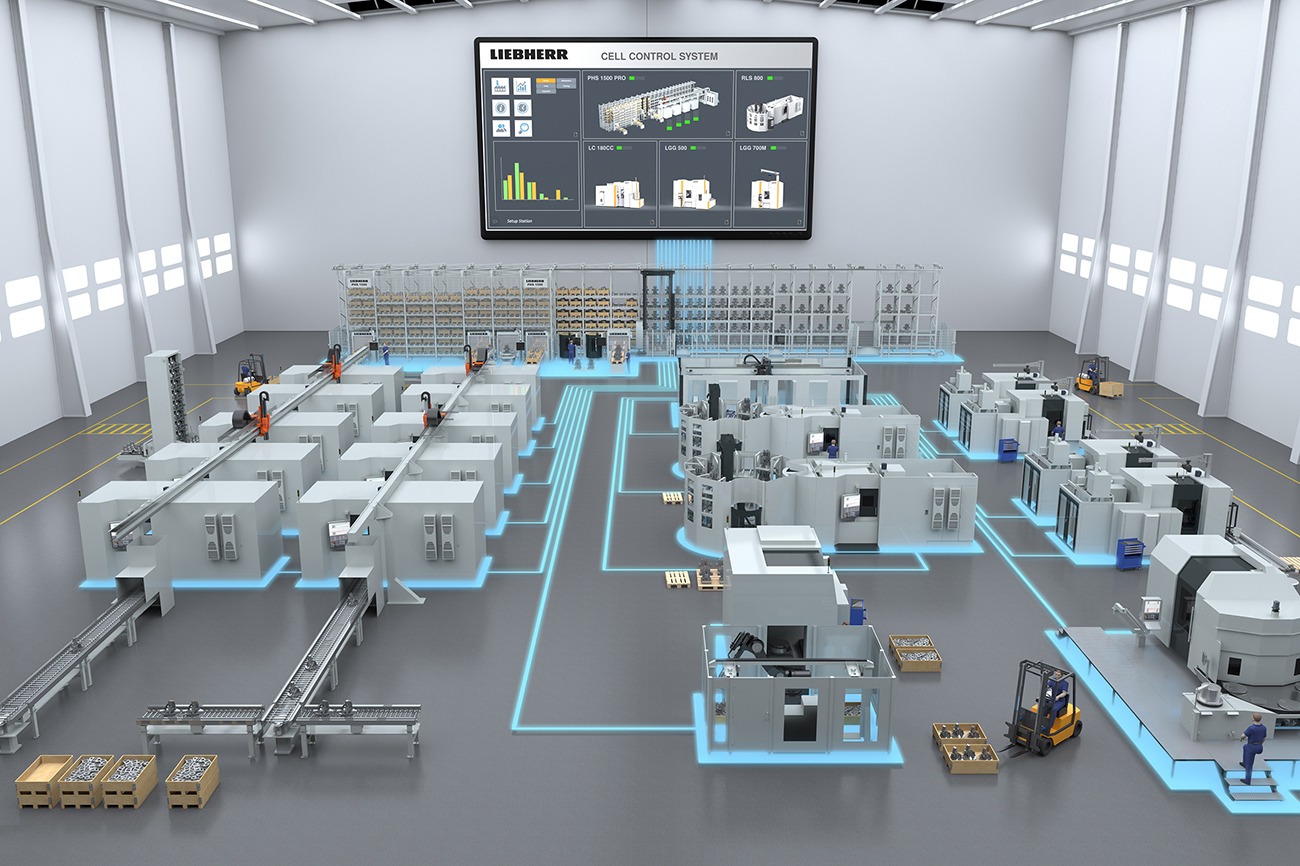
In a context of accelerated industrial transformation, marked by cost pressure, labor shortages, and the need to increase productivity, automated palletizing solutions appear to be a strategic lever.
The modular and scalable approach developed by Liebherr fits perfectly within this dynamic. It allows manufacturers to adopt automation progressively, without overly heavy initial investments, while maintaining room for future development.
At a time when European industry is seeking to strengthen its competitiveness against international players, this type of solution could well play a key role in modernizing production tools.
FAQ – Industrial Automation and Liebherr Palletizing Solutions
2. What is the difference between PHS Pro and PHS Allround?
PHS Pro is a fully customized solution tailored for complex industrial environments, while PHS Allround is a modular and flexible version that allows companies to adopt automation progressively.
3. Why is modularity important in industrial automation?
Modularity allows companies to adapt systems to their specific constraints such as space, budget, and future expansion. It enables gradual investment without limiting scalability.
4. What performance gains can these solutions deliver?
Palletizing systems can reduce cost per part by up to 40%, increase machine utilization rates up to 90%, and enable highly automated or even unmanned production processes.
5. Which industries use these solutions?
Liebherr’s palletizing systems are used across multiple industries, including construction, aerospace, agriculture, machine tools manufacturing, and mechanical component production.
6. What are the main challenges of industrial automation today?
Key challenges include system integration into existing environments, managing process complexity, controlling investment costs, and ensuring flexibility for varied production needs.
7. Why is automation becoming a strategic priority for manufacturers?
Due to labor shortages, cost pressures, and the need for higher productivity, automation helps companies remain competitive while improving operational efficiency.