
What Are AI Factories and Why Could They Transform Industry
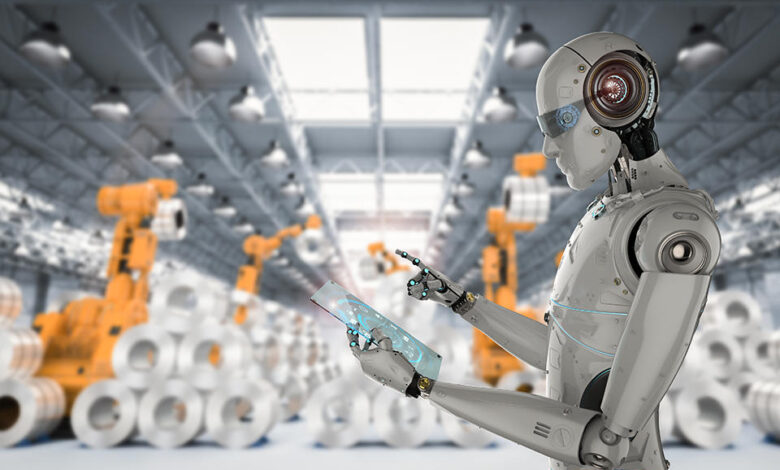
In 2025, the concept of AI Factories, popularized by Nvidia, has become a central topic for enterprises, CIOs, and policymakers. Often described as “factories of intelligence”, these infrastructures are designed to produce AI at scale models, agents, and applications much like a power plant produces electricity.
AI Factories are not just a software evolution: they represent a new industrial revolution where data, GPUs, and algorithms replace steam engines and assembly lines. According to McKinsey (2024), they could unlock $2.6 trillion in annual economic value by 2030, reshaping sectors from R&D to logistics and customer service.
What Is an AI Factory?
An AI Factory is a highly specialized data center built to train, deploy, and run artificial intelligence models at massive scale. It integrates cutting-edge GPUs, optimized storage, and AI software platforms to transform raw data into usable intelligence.
Nvidia, Microsoft, and Google describe AI Factories as “intelligence power plants” that:
- Generate large language models (LLMs), vision systems, and reasoning engines.
- Transform massive data volumes into real-world AI applications.
- Deliver intelligent agents capable of augmenting or replacing specific human tasks.
Example: Nvidia’s DGX SuperPOD architecture, built on the Blackwell GPU family, can deliver 30+ petaFLOPS of performance per unit, enabling training of trillion-parameter models in weeks instead of months.
How Do AI Factories Work?
Like traditional factories, AI Factories turn raw materials (data) into finished products (AI applications). Their operation relies on three key layers:
- Hardware (GPUs and accelerators)
- Nvidia Blackwell GPUs, Google TPU v5, or AMD Instinct accelerators deliver unmatched parallel computing.
- A single Blackwell GPU provides 25–30 petaFLOPS equivalent to millions of laptops running simultaneously.
- Software platforms
- Nvidia AI Enterprise and microservice frameworks (NIMs) streamline deployment.
- Open-source ecosystems like Hugging Face and PyTorch allow customization at scale.
- AI Factory Operating Systems
- Specialized OSs (e.g., Dynamo AI Factory OS) orchestrate inference, optimize energy usage, and manage distributed AI workloads across cloud and edge.
Which Industries Are Already Benefiting?
AI Factories are no longer futuristic concepts they’re already disrupting industries:
- Healthcare
- Nvidia collaborates with Amgen and Recursion to accelerate drug discovery, cutting development times by 50%.
- AI models for protein folding now surpass human teams in speed and accuracy.
- Manufacturing & Robotics
- Siemens and BMW use Omniverse simulations to train robots in digital twins of factories, reducing prototyping costs by 30%.
- Predictive maintenance powered by AI Factories prevents millions in downtime.
- Automotive
- Tesla and GM leverage AI Factories to refine autonomous driving systems, training on billions of kilometers of simulated driving data.
- Finance
- JPMorgan and Goldman Sachs deploy AI Factories to detect fraud and optimize credit scoring in real time.
According to BCG (2024), 65% of Fortune 500 companies have already invested in AI Factory infrastructure.
Why Call It a New Industrial Revolution?
Much like electricity and the Internet, AI Factories introduce a general-purpose technology (GPT) capable of transforming every industry.
They enable:
- Continuous AI production: models that improve autonomously through retraining.
- Autonomous systems: from supply chain agents to humanoid robots.
- Global scalability: with distributed infrastructures in the cloud and at the edge.
Goldman Sachs projects AI could boost global productivity by 1.5% annually until 2035, largely driven by automation from AI Factories.
Challenges for Enterprises
While promising, AI Factories also present strategic challenges:
- Investment Costs
- Building an AI Factory can cost from $50 million to over $500 million, depending on scale.
- Most enterprises will rent capacity via hyperscalers (AWS, Azure, Google Cloud) rather than build their own.
- Data Sovereignty
- Who owns and controls the models trained on corporate data? This is a pressing issue for governments and enterprises.
- Talent Shortage
- AI engineers, GPU specialists, and MLOps experts are scarce. Gartner estimates a 40% skills gap in enterprise AI teams by 2026.
- Energy Consumption
- According to the International Energy Agency (IEA), AI-related data centers could consume 4% of global electricity demand by 2030, equivalent to the consumption of Japan.
AI Factories mark the beginning of a new industrial revolution where data replaces coal, GPUs replace turbines, and algorithms replace assembly lines.
For enterprises, the stakes are clear: those who adopt AI Factory capabilities early will capture significant competitive advantages, while laggards risk being left behind.
Like electricity in the 19th century and the Internet in the 20th, AI Factories are becoming the infrastructure of the 21st century economy.
FAQ – AI Factories
2. Who are the main players building AI Factories?
Nvidia, Microsoft, Google, Amazon Web Services, and startups like Cerebras Systems are leading the charge.
3. How much does it cost to build an AI Factory?
Depending on scale, between $50 million and $500 million, with most enterprises opting for cloud-based AI Factory services instead of building from scratch.
4. Which industries are adopting AI Factories first?
Healthcare, manufacturing, automotive, and finance are among the earliest adopters.
5. How do AI Factories impact jobs?
They automate repetitive tasks but also create demand for AI engineers, data scientists, and robotics specialists, reshaping the labor market rather than simply replacing jobs.
6. Are AI Factories environmentally sustainable?
Currently, they consume large amounts of energy. According to the IEA, AI-related data centers could represent 4% of global electricity demand by 2030. Efforts in green computing and renewable energy integration are critical.
7. What is the link between AI Factories and robotics?
AI Factories train the models that power autonomous robots, cobots, and humanoids, enabling them to perceive, reason, and act in real-world environments.
8. How can enterprises prepare for AI Factories?
By investing in data strategy, upskilling teams, partnering with cloud providers, and ensuring robust governance for AI ethics, data privacy, and security.