


Professional Cleaning Robots: Buying Guide, Costs and Return on Investment
Which professional cleaning robot should you choose for a warehouse, shopping mall, hotel or industrial facility?
How much does an autonomous floor scrubber cost to purchase or rent?
And how can you determine whether it will be profitable for your facility?
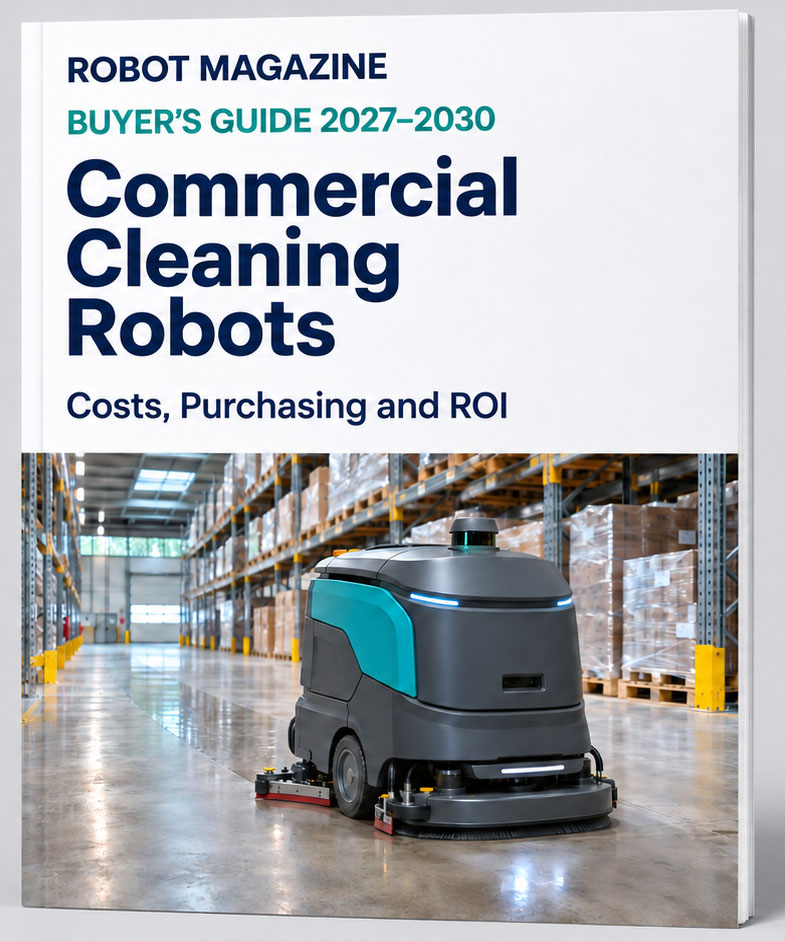
The Robot Magazine 2027–2030 White Paper helps facility managers, procurement professionals and cleaning companies compare robotic cleaning solutions. It includes an analysis of the European market, an overview of manufacturers, an example of a return on investment (ROI) calculation and a checklist to help prepare for an on-site trial.
Which Professional Cleaning Robot Should You Choose?
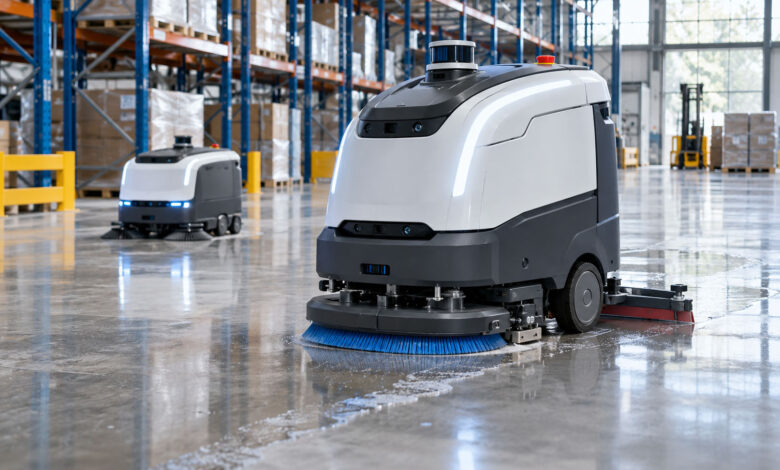
An autonomous floor scrubber cleans hard floors and collects dirty water. In a warehouse, the choice depends on factors such as aisle width, forklift traffic and floor contamination. In a shopping mall, opening hours and pedestrian traffic must also be considered. A robotic sweeper or vacuum cleaner may be better suited to environments where dust and dry debris are the main concerns.
Before comparing technical specifications, assess the floor area actually accessible to the robot, identify fixed and moving obstacles, and determine the time available for each cleaning cycle. This information will help define the route to be tested during a demonstration.
How Much Does an Autonomous Cleaning Robot Cost?
To establish a budget, consider the purchase price or rental fee, installation and commissioning, consumables, maintenance and the time required for supervision. Also ask which services are included in the contract, particularly troubleshooting and machine replacement in the event of downtime.
To compare purchasing with subscription-based rental (Robot-as-a-Service or RaaS), evaluate the offers over the same period and with an equivalent level of service. The guide details the cost components to review with suppliers.
How to Calculate the ROI of an Autonomous Floor Scrubber
Start by measuring how much time your cleaning teams currently spend maintaining the areas that the robot could cover.
During the trial, record the actual floor area cleaned, the quality of the cleaning results and the time your team spends preparing, assisting and maintaining the robot.
You can then compare cleaning costs before and after deployment and estimate the return on investment and payback period.
What Does the Robot Magazine White Paper Include?
- An analysis of the European professional cleaning robot market and its outlook through 2030.
- An overview of manufacturers and robotic cleaning solutions for different applications.
- A comparison framework for purchasing versus subscription-based rental.
- An example of an ROI calculation and a checklist for evaluating a robot at your facility.