
The Robotics Market in Switzerland: Innovation, Precision, and Global Impact
Switzerland may not be the first country that comes to mind when discussing industrial powerhouses like Germany or Japan, but in robotics, it is one of the most innovative and influential nations worldwide. With a tradition of precision engineering, world-class universities, and global companies, Switzerland has built a robotics ecosystem that punches far above its weight.
From industrial robotics giants like ABB, to pioneering drone companies such as Flyability, and research-driven startups like ANYbotics, Switzerland’s robotics market combines cutting-edge technology with practical applications. In this report, Robot-magazine.fr explores the Swiss robotics sector, its key players, its research excellence, and the trends shaping its future.
A Market Built on Precision and Innovation
Unlike Germany or Italy, Switzerland does not have a massive industrial base driving high volumes of robot installations. Instead, the Swiss robotics market is driven by innovation, exports, and niche excellence.
According to the International Federation of Robotics (IFR), Switzerland is not ranked among the top 10 countries in terms of industrial robot installations, largely due to its smaller manufacturing workforce. However, its robot density robots per 10,000 workers is significant in high-tech industries, and its companies and research labs export robotics solutions to markets across Europe, Asia, and North America.
Switzerland’s global reputation for precision mechanics, watchmaking, and medical technology has naturally translated into excellence in robotics, automation, and AI-driven systems.
Industrial and Collaborative Robotics Leaders
ABB Robotics (Zurich)
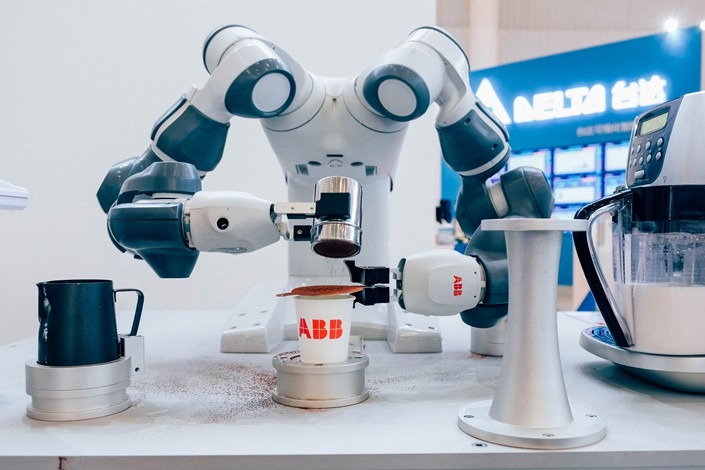
One of the world’s largest industrial robotics companies, ABB has its global headquarters in Zurich. ABB is known for:
- YuMi, one of the world’s first truly collaborative robots.
- A broad portfolio of robotic arms for welding, assembly, and packaging.
- Advanced AI-powered automation solutions for factories worldwide.
ABB is a global benchmark for cobotics and smart factory solutions, making Switzerland a leader in industrial automation innovation.
Stäubli Robotics (Pfäffikon)
Although originally French, Stäubli has its headquarters in Switzerland and is a major player in precision industrial robotics. Its robots are widely used in automotive, electronics, and cleanroom applications.
F&P Robotics (Zurich)
F&P develops service and collaborative robots for healthcare and hospitality. Its flagship product, P-Care, assists in elderly care, making it a pioneer in assistive robotics.
Medical Robotics: A Swiss Specialty
Switzerland is rapidly becoming a hotspot for medical robotics, an industry where its precision engineering and life sciences expertise give it a natural advantage.
- Distalmotion (Lausanne): Creator of Dexter, a hybrid robotic surgery system that offers surgeons more flexibility and affordability compared to traditional surgical robots.
- CAScination (Bern): Specializes in robotic navigation systems for liver and neurosurgery.
- EndoArt: Focuses on robotic implants and surgical innovations.
With its combination of medtech research and startup agility, Switzerland is positioning itself as a challenger to U.S. giants like Intuitive Surgical.
Switzerland: Europe’s Drone Valley
Switzerland is often described as the “Silicon Valley of Drones”. Thanks to EPFL Lausanne and ETH Zurich, the country has become a European leader in aerial robotics.
- Flyability (Lausanne): Known for its Elios drone, designed for indoor inspections in dangerous or confined environments (power plants, oil refineries, tunnels).
- Matternet (Zurich): A pioneer in drone delivery systems, used for transporting medical supplies in cities.
- SenseFly (Lausanne, spin-off of EPFL, acquired by AgEagle): Specializes in mapping drones for agriculture, construction, and surveying.
These companies demonstrate how Switzerland has created a global reputation for safe, reliable, and high-performance drone systems.
Quadrupeds and Advanced Robotics
Switzerland is also home to some of the most advanced legged robots in the world.
- ANYbotics (Zurich, ETH spin-off): Creator of ANYmal, a four-legged autonomous robot designed for industrial inspections in oil rigs, mines, and power plants. ANYmal has become one of the most advanced quadrupeds globally, rivaling Boston Dynamics’ Spot.
- Sevensense Robotics (Zurich, ETH spin-off): Develops AI-based navigation and perception systems that allow mobile robots to operate autonomously in complex environments.
These companies show how Switzerland has leveraged academic excellence to create world-class startups.
Research Ecosystem: ETH and EPFL Leading the Way
Switzerland’s strength in robotics comes largely from its universities and research institutes, which are ranked among the best in the world.
- ETH Zurich: Known for robotics, AI, and autonomous systems, ETH has spawned numerous startups such as ANYbotics and Sevensense.
- EPFL Lausanne: Houses the EPFL Robotics Center, focusing on drones, soft robotics, and AI integration. Many drone startups originated here.
- Idiap Research Institute (Martigny): Specializes in human-robot interaction, computer vision, and speech recognition.
- Swiss Innovation Park: Provides support for robotics startups across the country.
This research ecosystem ensures a constant flow of talent and spin-offs that enrich Switzerland’s robotics industry.
Switzerland’s Position in Global Robotics
Switzerland’s domestic market is small compared to Germany, Japan, or China, but its global influence is undeniable. It is recognized as:
- A leader in industrial robotics (ABB, Stäubli).
- A hotspot for drone innovation (Flyability, Matternet, SenseFly).
- A pioneer in quadrupeds (ANYbotics).
- A specialist in medical robotics (Distalmotion, CAScination).
- A hub for AI and navigation systems (Sevensense).
This unique mix allows Switzerland to position itself as a world-class robotics innovator, exporting advanced technologies worldwide.
Market Trends in Switzerland
- Medical Robotics Expansion: Swiss startups are challenging established players with more affordable and flexible systems.
- Drone Commercialization: Switzerland is pushing drone logistics, inspections, and rescue applications into real-world deployment.
- AI Integration: Navigation, perception, and autonomy are central areas where Swiss companies excel.
- Collaborative Robotics: ABB and F&P Robotics are driving new applications for cobots in factories and care.
- Legged Robotics for Industry: ANYbotics’ ANYmal is setting a new standard for industrial inspections.
Switzerland may not compete in robot installation numbers, but its innovation ecosystem, world-leading companies, and research excellence make it one of the most influential robotics hubs in the world.
From ABB’s global dominance in industrial robotics, to Flyability’s breakthrough drones, to ANYbotics’ quadrupeds, Switzerland is shaping the future of robotics far beyond its borders.
With strong government support for innovation, deep academic research, and a steady flow of spin-offs, Switzerland is positioned to remain a global leader in niche robotics markets such as drones, medical robotics, and quadrupeds for years to come.
FAQ – Robotics in Switzerland
2. Why is Switzerland called “Europe’s Drone Valley”?
Because of its leadership in drone research and startups like Flyability, Matternet, and SenseFly.
3. What are the most famous robotics startups in Switzerland?
ANYbotics (quadrupeds), Sevensense Robotics (AI navigation), and Distalmotion (surgical robotics).
4. Which universities lead robotics research in Switzerland?
ETH Zurich and EPFL Lausanne are globally recognized leaders.
5. Does Switzerland build humanoid robots?
Not at the scale of Japan or Italy, but it focuses on service, assistive, and quadruped robots.
6. What are Switzerland’s strengths compared to Germany or Italy?
Innovation, research spin-offs, drones, quadrupeds, and medical robotics.
7. Is medical robotics a growing sector in Switzerland?
Yes, companies like Distalmotion and CAScination are gaining international traction.
8. What role does AI play in Swiss robotics?
AI is central, especially in navigation, perception, and autonomy for drones and mobile robots.