
Why Robotics Is Changing Scale This Year ?
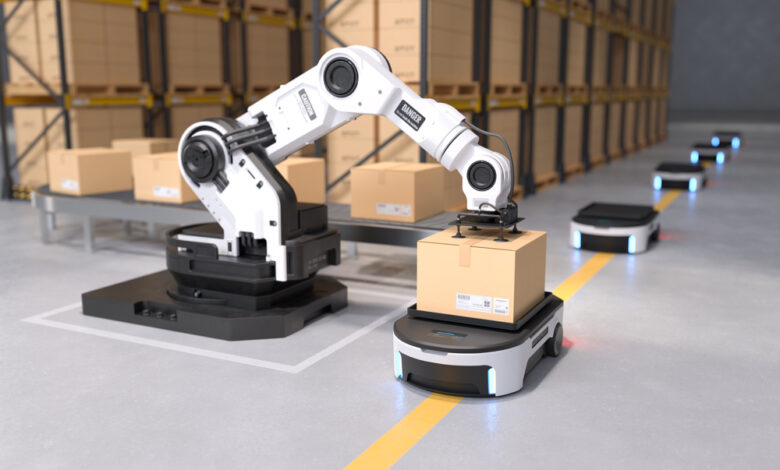
For decades, robotics evolved in controlled steps. A new actuator here, a better controller there, followed by slow and cautious industrial adoption. Robots were powerful, precise, and reliable but also rigid, expensive to deploy, and confined to highly structured environments.
This year marks a clear break from that trajectory. In 2026, robotics is no longer advancing incrementally. It is changing scale.
This shift is not driven by a single breakthrough, but by the convergence of artificial intelligence, embedded computing, simulation, labor shortages, and platform standardization. Robotics is moving beyond factory cells and entering the real world warehouses, hospitals, farms, construction sites, and public spaces.
For Robot Magazine, 2026 stands out as a pivotal year, comparable to the rise of cloud computing in the 2010s or the smartphone revolution in the early 2000s.
A Technology Long Limited by Its Own Constraints
Until recently, most industrial robots operated under strict conditions:
-
fixed environments
-
repetitive tasks
-
deterministic programming
-
limited perception
-
high integration costs
Robots excelled at repetition but struggled with variability. A change in lighting, object shape, workflow, or layout often required costly reprogramming or system downtime.
This rigidity kept robotics largely confined to large-scale manufacturing, particularly automotive and electronics. Small and medium-sized enterprises, logistics, healthcare, agriculture, and construction remained largely manual.
The promise of robotics was clear but its reach was narrow.

What is happening in robotics is not
a technological miracle, but the
convergence of AI, computing power,
economics, and real-world constraints.
Artificial Intelligence Turns Robots into Decision-Making Systems
The first driver behind robotics’ change of scale is the maturation of artificial intelligence.
Modern robots are no longer just executing predefined trajectories. They are increasingly capable of:
-
perceiving complex environments
-
interpreting visual and sensor data
-
understanding high-level instructions
-
planning actions dynamically
-
adapting to uncertainty
Multimodal AI models combining vision, language, force feedback, and motion allow robots to reason within constraints. This does not mean robots “think” like humans, but they can now make context-aware decisions instead of blindly following scripts.
This shift transforms robots from automated machines into physical AI agents, capable of operating in environments that were previously considered too unpredictable.
Embedded Computing Redefines Autonomy
Equally important is the rise of high-performance embedded computing.
Thanks to new generations of processors and AI accelerators, robots can now perform complex inference directly on board. This enables:
-
real-time perception and decision-making
-
low-latency control loops
-
reduced dependence on cloud connectivity
-
improved reliability and safety
-
better data sovereignty
Robots no longer need external PCs or centralized servers to function intelligently. They have become edge systems, capable of operating autonomously even in remote or critical environments.
This is a fundamental shift. Intelligence is no longer centralized it is distributed across fleets of machines.
Robots Enter Unstructured, Human-Centric Environments
Robotics is changing scale because robots are no longer designed only for structured spaces.
Alongside traditional industrial arms, we now see:
-
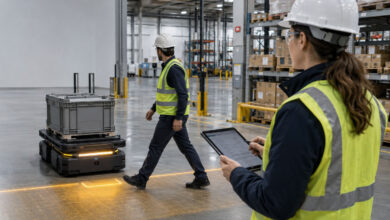
autonomous mobile robots navigating busy warehouses
-
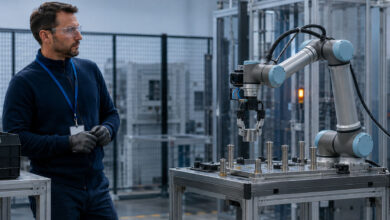
collaborative robots working safely next to humans
-
service robots operating in hospitals and hotels
-
agricultural robots adapting to natural terrain
-
inspection and maintenance robots in infrastructure
-
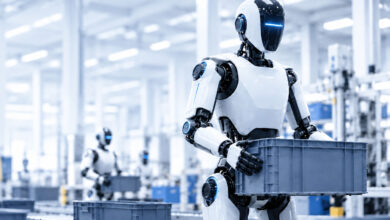
humanoid robots designed for human-built environments
The defining feature of these robots is not their form factor, but their adaptability. They operate in spaces built for humans, not redesigned for machines.
This marks a major philosophical shift: instead of forcing the world to adapt to robots, robots are adapting to the world.
Labor Shortages Accelerate Adoption
Beyond technology, economics plays a decisive role.
Across industries and regions, companies face:
-
aging workforces
-
labor shortages in physically demanding jobs
-
high turnover rates
-
declining interest in repetitive or hazardous tasks
In logistics, agriculture, manufacturing, healthcare, and sanitation, automation is no longer about productivity alone. It is about operational continuity.
Robotics becomes a necessity rather than an optimization tool. In many cases, robots are not replacing workers they are filling positions that no longer attract human labor.
This structural shift is one of the strongest accelerators of large-scale robotic deployment.
Robotics may be less visible than
consumer AI, but its transformation
is deeper, slower and far more structural.
Platform Standardization Fuels the Ecosystem
Another key factor behind robotics’ change of scale is platform convergence.
The robotics sector has long been fragmented, with proprietary hardware, software, and integration methods. That fragmentation is now giving way to:
-
shared operating systems and middleware
-
common simulation and development tools
-
standardized interfaces between robots and IT systems
-
cloud-edge hybrid architectures
This standardization reduces development costs, shortens deployment cycles, and lowers barriers to entry for new players. It also allows skills, software, and best practices to transfer across platforms.
Robotics is beginning to resemble modern computing: modular, updateable, and ecosystem-driven.
From Individual Robots to Robotic Infrastructure
Perhaps the most important shift is conceptual.
Robots are no longer treated as isolated machines. Companies now think in terms of:
-
robot fleets
-
centralized supervision
-
orchestration layers
-
predictive maintenance
-
digital twins
-
continuous learning systems
A robot deployed today improves tomorrow through shared data, software updates, and collective learning across fleets. Value increasingly lies in software, data, and integration not just hardware.
Robotics is becoming an infrastructure layer, similar to IT systems or cloud platforms.
Challenges Remain and They Are Significant
Despite this change of scale, robotics still faces real obstacles:
-
high upfront investment costs
-
cybersecurity risks
-
regulatory and safety compliance
-
ethical and social concerns
-
workforce adaptation and training
Technology is advancing faster than organizational readiness. Deployment success depends not only on engineering, but also on change management, regulation, and human acceptance.
The challenge is no longer whether robots can perform tasks but how societies and industries integrate them responsibly.
2026: A Pivotal Year
What makes this year different is not hype, but alignment.
Technology, economics, and societal needs are converging. Robotics is expanding beyond pilot projects and isolated use cases into scalable, repeatable deployments across sectors.
Manufacturing, logistics, healthcare, agriculture, energy, and public services are all being reshaped by robotic systems that are more autonomous, flexible, and intelligent than ever before.
This shift is irreversible.
A Quiet but Structural Transformation
Robotics may not dominate headlines like consumer AI, but its impact is deeper and more structural. The change of scale we are witnessing this year reflects the maturation of robotics as a foundational technology.
Robots are no longer futuristic promises. They are becoming reliable, adaptable tools embedded in everyday operations.
For Robot Magazine, 2026 marks the moment when robotics transitions from a specialized industrial solution to a cross-sector infrastructure, reshaping how work is performed, how services are delivered, and how physical systems interact with digital intelligence.
The key question is no longer if robotics will scale but how quickly industries and societies will adapt to this new reality.
FAQ – Why Robotics Is Changing Scale in 2026
2. How has artificial intelligence changed what robots are capable of doing?
Artificial intelligence has moved robots beyond rigid, pre-programmed behavior. Modern robots can now perceive complex environments, interpret sensor and visual data, understand high-level instructions, and adapt their actions in real time. Rather than executing fixed scripts, robots increasingly make context-aware decisions. This shift turns robots into physical AI systems capable of operating in unpredictable, real-world conditions.
3. Why is embedded computing critical to the new scale of robotics?
Advances in embedded processors and AI accelerators allow robots to perform complex reasoning directly on board. This enables real-time autonomy, low-latency decision-making, and reduced dependence on cloud connectivity. As intelligence moves to the edge, robots become more reliable, safer, and capable of operating in remote or mission-critical environments. Autonomy is no longer centralized; it is distributed across machines.
4. What explains the expansion of robots into human-centered environments?
Robots are no longer confined to controlled, machine-designed spaces. They are now built to operate in environments designed for humans, such as warehouses, hospitals, farms, construction sites, and public infrastructure. This is possible because robots can now adapt to variability rather than requiring the environment to be standardized. The fundamental shift is that robots are adapting to the world, not the other way around.
5. How do labor shortages influence the rapid adoption of robotics?
Across many industries, companies face aging workforces, labor shortages, and declining interest in repetitive or physically demanding jobs. In this context, robotics is no longer primarily about productivity gains. It becomes essential for operational continuity. Robots increasingly fill roles that cannot be staffed reliably by humans, making automation a necessity rather than a strategic option.
6. Why does platform standardization matter for robotics at scale?
Historically, robotics suffered from fragmentation, with proprietary hardware, software, and integration methods. Platform standardization is changing this. Shared operating systems, simulation tools, middleware, and cloud-edge architectures reduce costs and complexity. This allows robotics to scale like modern computing platforms, enabling faster deployment, easier updates, and stronger ecosystems.
7. What is the biggest conceptual shift in robotics today?
The most important change is the move from individual robots to robotic systems. Robots are now deployed as fleets, managed through orchestration layers, supported by digital twins, and continuously improved through shared data and software updates. Value increasingly lies in software, integration, and infrastructure rather than hardware alone. Robotics is becoming a foundational layer of modern industry, similar to IT or cloud computing.