
Humanoid Robots: Enough Demos. Who Is Actually Making Money?
Humanoid robotics has spent years selling a vision. In 2026, the industry is finally being asked to sell productivity.
Humanoids can walk, sort components, manipulate objects and execute increasingly complex industrial tasks. Videos of robots dancing, running or folding laundry continue to attract millions of views.
But industrial buyers are beginning to ask a much less glamorous question: Where is the ROI?
As the sector moves from prototypes to production environments, the benchmark is changing. A successful demonstration is no longer enough. Humanoid manufacturers now need to prove uptime, throughput, safety, integration costs and, ultimately, that somebody is willing to pay for the work their machines perform.
The evidence available in September 2026 suggests that this transition has started. But only a small number of companies can currently point to meaningful commercial deployments.
Agility Robotics: perhaps the clearest commercial case
If the criterion is simply “Is a customer paying to put humanoids to work?”, Agility Robotics is one of the strongest cases today.
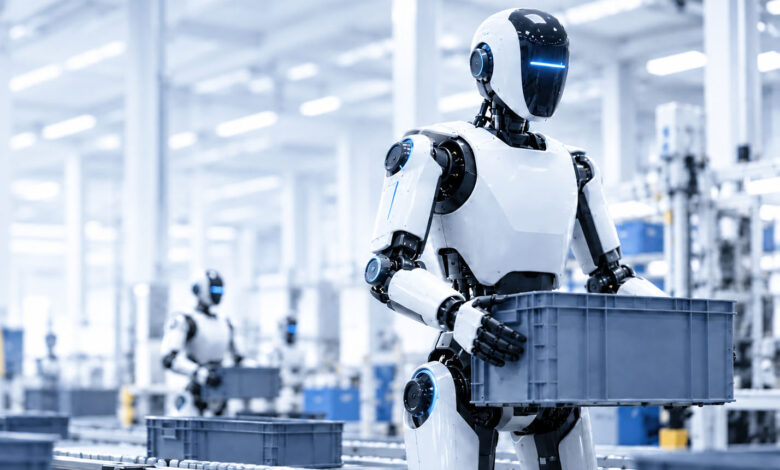
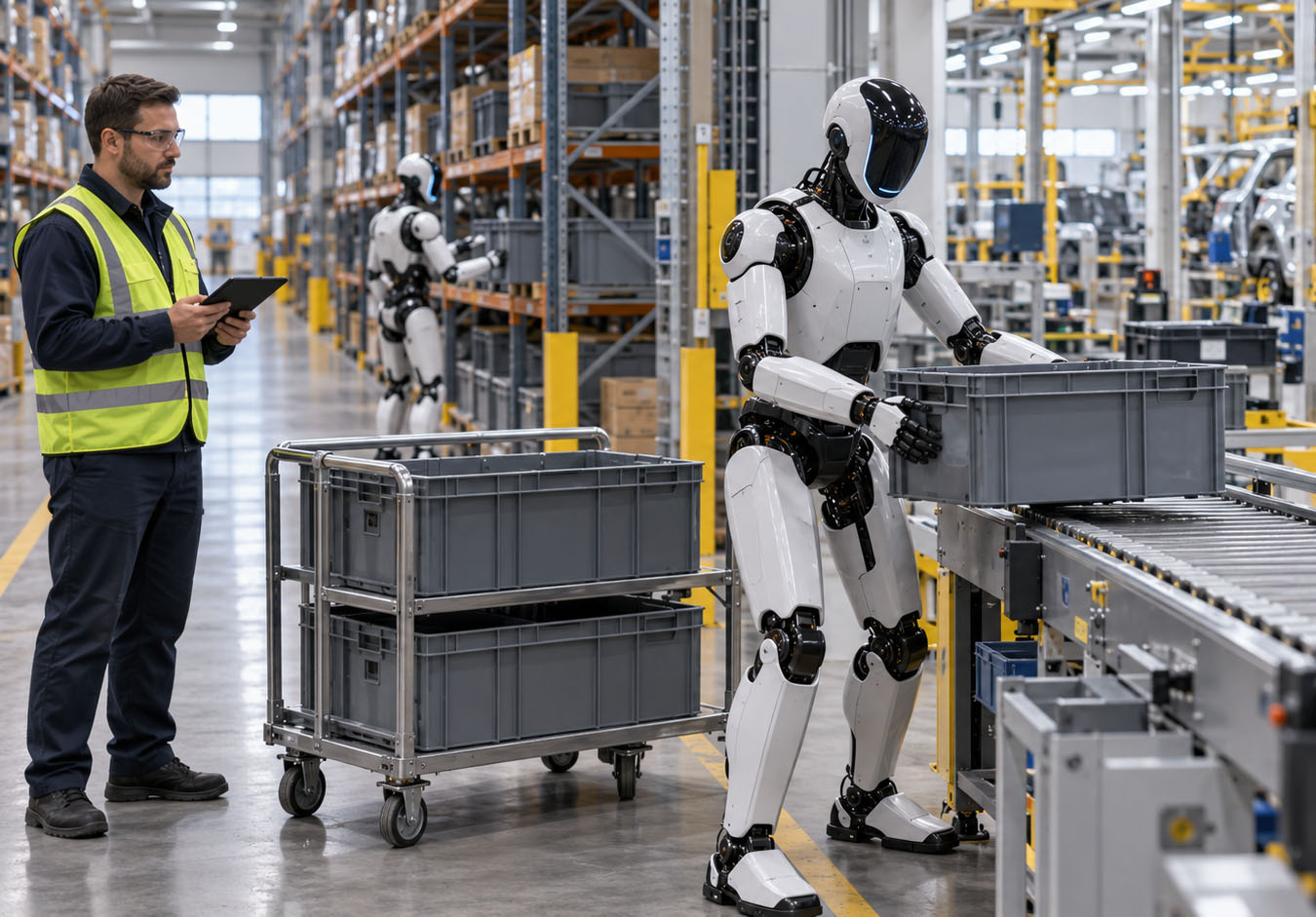
Its Digit robot has been operating commercially with GXO Logistics since 2024 under a multi-year Robots-as-a-Service agreement. Digit performs a deliberately unglamorous logistics workflow: moving totes from autonomous robots and placing them onto conveyors.
That is precisely what makes the deployment interesting. It is repetitive work occurring inside an existing warehouse process rather than a carefully staged robotics demonstration.
Agility subsequently reported that Digit had moved more than 100,000 totes at GXO’s Flowery Branch facility.
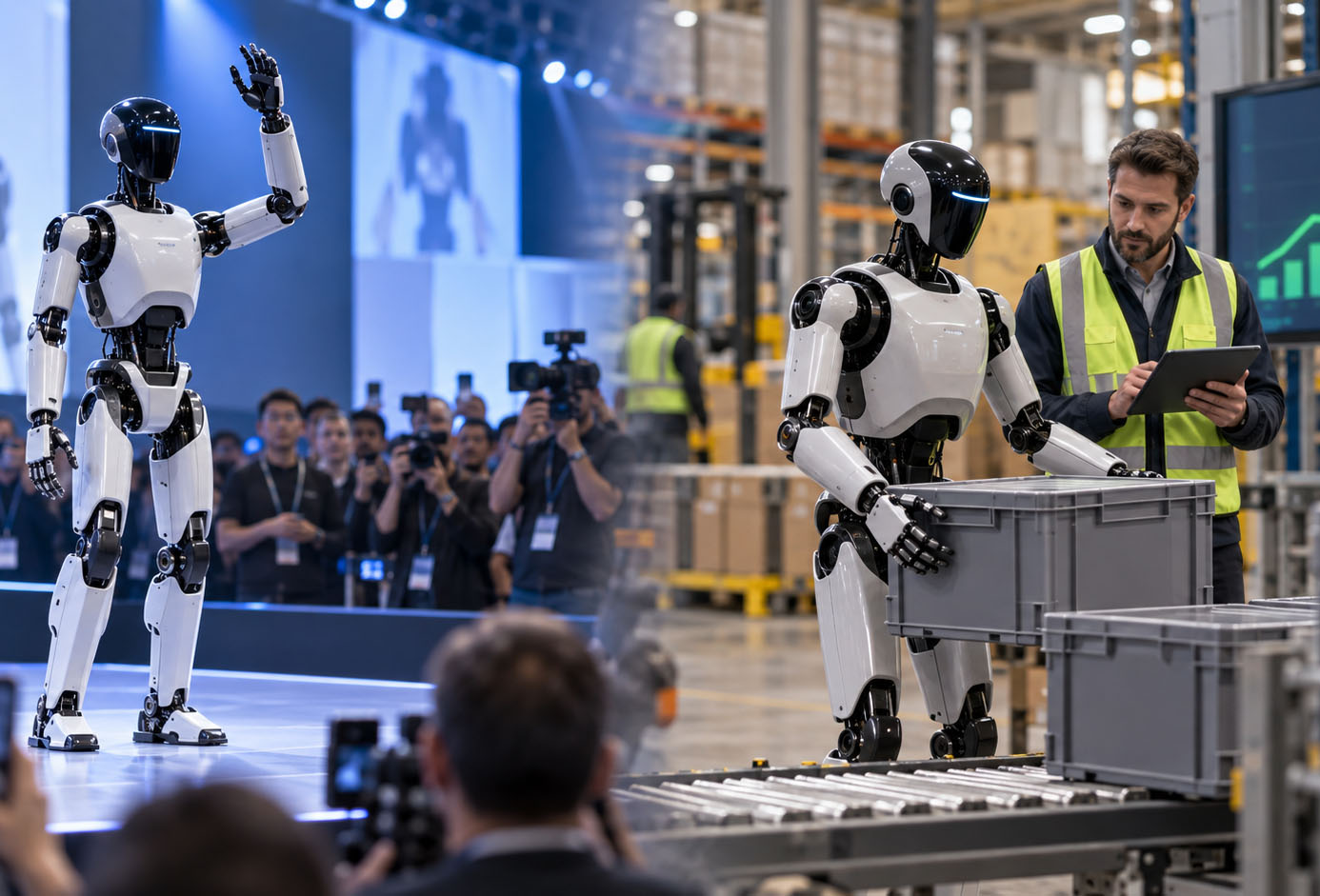
The company has since expanded its commercial footprint. Toyota Motor Manufacturing Canada signed a commercial agreement in February 2026 following a pilot, while Agility says its robots are operating or being introduced with industrial groups including GXO, Toyota and Schaeffler.
More importantly, Agility disclosed in 2026 that it had secured more than $300 million in multi-year contracted orders for Digit v5.
That does not mean $300 million has already been recognized as revenue. Orders, deployments and recognized revenue are three very different metrics. But it is one of the clearest signs yet that industrial customers are prepared to commit significant budgets to humanoid automation.
In financial disclosures surrounding its planned public listing, Agility presented an illustrative model in which a Digit v5 could cost approximately $200,000, plus around $20,000 for deployment and approximately $36,000 per year for software and maintenance. Using a five-year operating life, that implies a total customer cost around $400,000.
The fundamental industrial question therefore becomes measurable:
Can one humanoid create more than roughly $80,000 per year of economic value after integration, supervision and operational constraints?
If it can, humanoid robotics starts becoming an automation investment rather than a research experiment.

The winner of humanoid robotics may not be
the company with the most impressive robot.
It may be the company that can prove its robot
creates more economic value than it costs to deploy.
Figure: impressive production data, but different economics
Figure has produced perhaps the most important independently confirmed industrial dataset in the sector.
During its Figure 02 deployment at BMW’s Spartanburg plant, the robot worked on an active automotive production line handling sheet metal components. BMW says the deployment accumulated approximately 1,250 operating hours, more than 90,000 components handled, around 1.2 million robot steps and more than 30,000 BMW X3 vehicles supported.
This matters because industrial robotics ultimately lives or dies on repetition. Performing a manipulation once proves capability. Performing it tens of thousands of times begins to demonstrate reliability.
BMW has since moved to Figure 03 and a more complex logistics sequencing application, where robots must select components from containers and organize them for just-in-sequence production.
Figure therefore appears to have crossed an important technical threshold: its humanoids are no longer confined to the laboratory.
But an important distinction remains: operational success is not the same thing as demonstrated profitability.
Figure is privately held and does not disclose detailed humanoid revenue, gross margins, deployment costs or customer economics. We know considerably more about what its robots can accomplish than about how much money those deployments generate. That distinction will become increasingly important.
China is selling humanoids, but who is buying them?
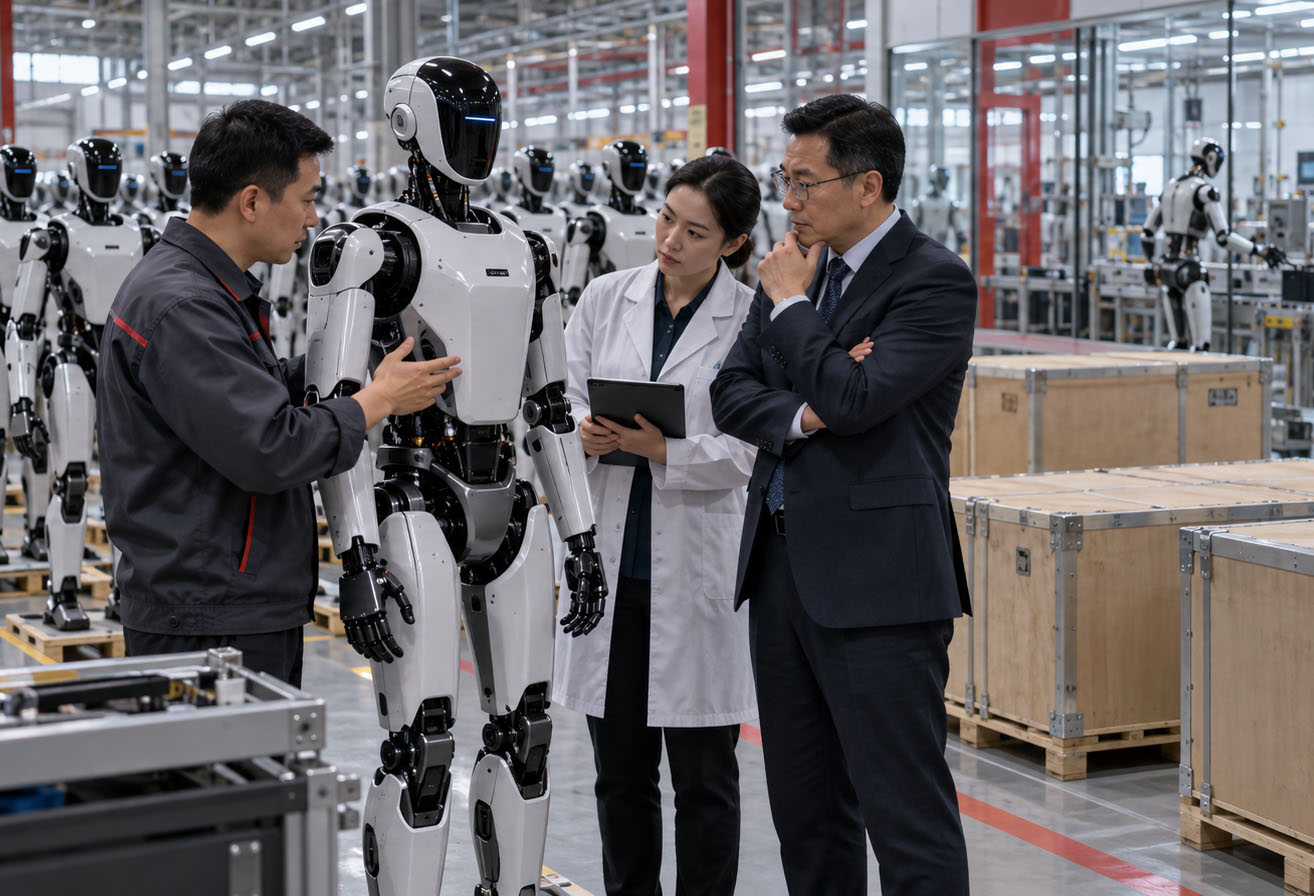
China presents a completely different picture. Chinese manufacturers are rapidly industrializing humanoid production, while competition is pushing hardware prices downward.
UBTECH is particularly interesting because, unlike many private Western humanoid startups, it publishes financial results. For the first half of 2026, UBTECH reported approximately RMB 590 million in revenue from full-size embodied intelligence humanoid robot products and services, with 921 units sold.
That makes UBTECH one of the few companies where significant humanoid-related revenue can actually be observed.
But revenue needs context. A significant portion of Chinese humanoid demand has been driven by government procurement, state-backed training centres and subsidies rather than conventional private-sector automation demand.
The distinction matters. Selling a robot is not necessarily evidence that the robot is economically replacing or augmenting human labour in a factory. A machine purchased by a research laboratory or government-backed robotics training centre generates revenue for the manufacturer, but it does not demonstrate industrial ROI.
China may therefore currently be the world’s fastest-growing humanoid hardware market without yet being the world’s most mature humanoid labour market.
Tesla: enormous ambition, limited external evidence
Tesla remains impossible to ignore. Optimus potentially benefits from something many robotics startups lack: factories, manufacturing expertise, computing infrastructure and an enormous internal environment in which robots can be developed and deployed. In theory, Tesla can become both manufacturer and first customer.
But from an industrial procurement perspective, the evidence remains limited. Tesla has demonstrated increasingly sophisticated Optimus capabilities and has discussed internal factory deployment at scale. Yet detailed, independently verified figures covering uptime, task throughput, cost per operation or external customer ROI remain scarce.
The interesting question is therefore no longer whether Optimus can perform useful tasks. It is:
When will Tesla publish the equivalent of BMW’s 90,000-part Figure deployment or GXO’s 100,000-tote Digit deployment?
Until then, Optimus remains one of the industry’s most important technology programmes, but not yet its clearest commercial benchmark.
Moving 100,000 totes may be less
spectacular than a humanoid dancing.
Economically, it is far more interesting.
Apptronik, Boston Dynamics and the rest of the field
The same distinction applies elsewhere. Apptronik has been working with Mercedes-Benz on Apollo humanoid applications. Boston Dynamics and Hyundai are preparing Atlas for industrial environments. Numerous Chinese manufacturers, including Unitree, AgiBot and Fourier Intelligence, are rapidly improving hardware and reducing costs.
These programmes matter. But pilots, partnerships and purchase announcements should not be confused with scaled commercial operations.
For technical buyers, five metrics are becoming much more useful than demo videos:
- Autonomous operating hours
- Intervention rate
- Task throughput
- Total deployment cost
- Cost per completed operation
Add safety certification, maintenance requirements and integration with factory and warehouse management systems, and the real difficulty of humanoid deployment becomes apparent.
The hidden metric: human intervention
Perhaps the most important number in humanoid robotics is one companies rarely advertise: how often does a human need to help the robot?
A humanoid could theoretically work 20 hours per day. But if remote operators frequently intervene, reset failed tasks or manually control difficult manipulations, the economics change dramatically.
This is why autonomy percentage alone can be misleading. A commercially meaningful humanoid needs not only high autonomy but also a sufficiently low intervention frequency and short recovery time.
A robot completing 99% of actions autonomously sounds impressive. But in a workflow containing thousands of actions per shift, the remaining 1% can still generate substantial human supervision.
The industry’s next transparency battle may therefore concern intervention rates rather than walking speed or dexterity.
Why warehouses and factories are winning first
The earliest viable humanoid applications share several characteristics. They occur in relatively structured environments. The workflows repeat frequently. Objects and infrastructure are reasonably predictable. The economic value of automation can be measured.
Labour shortages, ergonomics and undesirable repetitive work also create an existing business problem. This explains why logistics and automotive manufacturing are emerging ahead of household robotics.
The humanoid’s theoretical advantage is not necessarily that it can outperform a specialized industrial robot. Often it cannot. Its advantage is that it may eventually operate inside infrastructure designed for humans without requiring the facility to be rebuilt around automation.
Doors, shelves, carts, workstations and production lines were designed around human geometry. A sufficiently capable general-purpose robot could exploit that installed infrastructure. That is the economic hypothesis behind the humanoid.
The real competitor isn’t another humanoid
There is another uncomfortable question the industry needs to answer. A humanoid robot is not competing only against Figure, Digit, Optimus or Apollo. It competes against an industrial robot arm, an autonomous mobile robot, a conveyor, machine vision, a purpose-built automation cell and, of course, a human worker.
If a $50,000 automation solution can perform the same workflow more reliably than a $200,000 humanoid, there is little economic reason to use a humanoid.
The humanoid only wins when its generality creates value. That could come from performing several tasks with the same hardware, being redeployed without major infrastructure changes, handling environments designed for humans, or learning new workflows through software rather than mechanical reengineering.
This is why the ultimate commercial metric may not be cost per robot. It could be cost per task across the robot’s lifetime.
From cost per robot to cost per productive hour
Industrial buyers may soon stop asking: How much does the humanoid cost?
The better question is: How much does one productive autonomous hour cost?
Imagine a $200,000 robot operating reliably for five years. If it works only a few hours per day, requires frequent supervision and performs one narrow workflow, the economics may be poor. If the same hardware works across multiple shifts, performs several tasks and learns additional workflows through software updates, its economics change dramatically.
The real value is therefore not simply making robots more capable. It is allowing the same physical asset to become more productive over time through software. That is fundamentally different from traditional fixed automation.
So, who is actually making money?
As of September 2026, the answer requires nuance.
Agility Robotics has one of the strongest cases for genuine paid industrial deployment and has disclosed a substantial contracted order book.
Figure has some of the strongest publicly verified production evidence, particularly through BMW, but its underlying revenue and deployment economics remain private.
UBTECH is generating substantial identifiable humanoid-related revenue, although the Chinese market’s dependence on public procurement and training infrastructure complicates comparisons with Western industrial deployments.
Tesla, Apptronik, Boston Dynamics and many emerging competitors remain strategically important but have yet to publish enough standardized commercial data to make direct ROI comparisons possible.
Nobody has yet demonstrated, publicly and at massive scale, that general-purpose humanoids can economically replace conventional automation or human labour across multiple industries.
But something important has changed. Two years ago, the central question was: Can humanoid robots work? In 2026, there is enough evidence to answer yes, under specific conditions.
The next question is much harder: Can they work cheaply enough, reliably enough and autonomously enough to generate sustainable profit?
That is the race that matters now.
The winner of humanoid robotics may not be the company with the robot that runs fastest, looks most human or produces the most impressive demonstration. It may simply be the company that can prove one equation:
Value of work performed > total cost of deploying the robot.
Everything else is still a demo.
2. Which humanoid robotics company currently has the strongest commercial case?
Agility Robotics presents one of the clearest examples of paid industrial deployment. In addition to its work with GXO and Toyota, the company disclosed more than $300 million in multi-year contracted orders for Digit v5 in 2026.
3. How much could an industrial humanoid robot cost?
Agility presented an illustrative model in which Digit v5 could cost approximately $200,000, plus around $20,000 for deployment and about $36,000 annually for software and maintenance. Over five years, this would represent a total customer cost of roughly $400,000.
4. What metrics should companies use to measure humanoid robot ROI?
Industrial buyers should look beyond impressive demonstrations and measure autonomous operating hours, intervention rate, task throughput, total deployment cost and cost per completed operation. Safety, maintenance and integration costs must also be considered when calculating the real business case.
5. Why is the human intervention rate important for humanoid robots?
A robot may achieve a high autonomy percentage while still requiring frequent human assistance across thousands of actions. Remote interventions, task resets and manual recovery can significantly increase operating costs, making intervention frequency an important indicator of commercial viability.
6. Why are factories and warehouses becoming the first major markets for humanoids?
Factories and warehouses offer structured environments, repetitive workflows and measurable automation economics. Humanoids may also have an advantage because they can potentially use doors, shelves, carts and workstations originally designed around human geometry without requiring facilities to be completely redesigned.
7. What will determine whether humanoid robots become economically viable?
The decisive metric may ultimately be the value of productive work generated over the robot’s lifetime compared with its total deployment and operating cost. Humanoids will need to demonstrate that their flexibility, autonomy and ability to perform multiple tasks provide better economics than conventional automation or human labour.