
Global Robotics Clusters: The New Global Map of Robotics
When Robotics Goes Global
Global Robotics Clusters are now the true epicenters of robotic innovation. These ecosystems connect companies, universities, laboratories, investors, and governments around a single mission: accelerating the transition toward an automated, sustainable, and intelligent economy.
From Boston to Odense, Daegu to Shenzhen, these clusters form a worldwide constellation of talent and technology. Their interconnection through the Global Robot Cluster (GRC) symbolizes the globalization of robotics, with a clear goal: sharing knowledge and building common standards.
1. What Is a Robotics Cluster?
A robotics cluster is an innovation hub bringing together companies, researchers, and institutions focused on the design, manufacturing, and deployment of robots.
These clusters enable:
• Sharing of infrastructure (labs, test benches, data centers)
• Accelerated research and development
• Connections between startups and large corporations
• Attraction of international talent
• Creation of local synergies with global impact
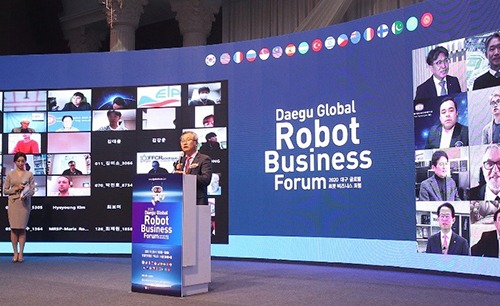
The Global Robot Cluster (GRC), founded during the Global Robotics Business Forum in Daegu (South Korea) in 2018, now links these hubs into an international network of robotic innovation.
Its mission: foster collaboration, harmonize standards, and promote ethical and inclusive robotics.
2. Global Overview of Major Robotics Clusters
🇩🇰 Odense Robotics – The Danish Miracle
-
Location: Odense, Denmark
-
Specialty: Collaborative robotics, industrial automation
-
Highlights: Over 130 companies employing 3,600 people. Odense brands itself as “the world’s robotics capital.”
-
Strengths: Strong government support and synergy between startups and universities.
-
Challenge: Maintaining its lead amid growing European and Asian competition.
🇳🇱 RoboValley – Europe’s Silicon Valley of Robotics
-
Location: Delft, Netherlands
-
Specialty: Research, technology transfer, academic robotics
-
Highlights: Built around the TU Delft Robotics Institute, connecting universities, investors, and companies.
-
Goal: Make Delft the nerve center of European robotics with a €100 million investment fund.
🇺🇸 MassRobotics & USARC – The U.S. Innovation Powerhouse
-
Major Clusters:
-
MassRobotics (Boston)
-
Silicon Valley Robotics (California)
-
Pittsburgh Robotics Network
Together, they form the US Alliance of Robotics Clusters (USARC).
These hubs connect research (MIT, Carnegie Mellon), startups, and investors to maintain U.S. leadership.
-
-
Specialties: Service robotics, logistics, defense, and medical robotics.
🇨🇳 China Robot Industry Alliance – The Global Machine
-
Location: Beijing, Shanghai, Shenzhen
-
Specialty: Industrial robotics, humanoid robots, components
-
Key Data: China installs over 50% of the world’s industrial robots.
-
Strengths: Massive production capacity, strong government support.
-
Challenge: Shifting from quantity to quality and strengthening intellectual property.
🇯🇵 Japan Robot Association – The Culture of Excellence
-
Location: Tokyo, Osaka, Nagoya
-
Specialty: Service robotics, industrial robotics, humanoid robots (Honda, SoftBank Robotics, Fanuc)
-
Highlights: Deep social integration of robotics in healthcare, education, and assistance.
-
Challenge: Aging population and need for innovation in service robotics.
🇰🇷 REPA & Daegu Cluster – South Korea, the Conductor
-
Location: Daegu, South Korea
-
Specialty: Medical robotics, AI integration, industrial robotics
-
Global Role: Hosts the secretariat of the Global Robot Cluster (GRC).
-
Goal: Establish Daegu as the global capital of intelligent robotics.
🇫🇷 COBOTEAM & Robotics Place – The French Ecosystem
-
COBOTEAM (Lyon): Network focused on collaborative robotics (cobots).
-
Robotics Place (Toulouse): Gathers players in industrial, drone, and service robotics.
-
French Strengths: Engineering, public research, startups in healthcare, agri-food, and logistics.
-
Challenge: Better regional coordination and stronger international visibility.
🇩🇪 German Robotics Association – Germany, the Industrial Stronghold
-
Location: Munich, Stuttgart, Hanover
-
Specialty: Industrial robotics, cobotics, embedded AI
-
Strengths: Industry 4.0 leadership, world-class engineering, global standards (KUKA, ABB Germany).
-
Challenge: Rising costs and industrial aging.
🇸🇬 SIAA (Singapore) & MyRAS (Malaysia) – Emerging Asian Clusters
-
Specialty: Smart cities, service robotics, urban automation
-
Strengths: Strong government support, national incubators, regional collaboration.
-
Goal: Become the hub of tropical and urban robotics in Southeast Asia.
🇨🇭 Swiss Robotics & Innovation Network – Alpine Europe in Motion
-
Location: Lausanne, Zurich
-
Major Institutes: EPFL, ETH Zurich
-
Specialty: Drones, medical robotics, precision mechatronics
-
Strengths: Academic excellence, deeptech startups.
-
Challenge: Scaling industrialization.
🇬🇧 Bristol Robotics Laboratory – British Excellence
-
Location: Bristol, United Kingdom
-
Specialty: Humanoid robotics, cognitive robotics, human-machine interaction
-
Highlights: Europe’s only joint inter-university robotics lab (UWE + University of Bristol).
-
Goal: Make the UK a leader in social and educational robotics.
3. The Global Robot Cluster (GRC): A Worldwide Innovation Network
The Global Robot Cluster (GRC) unites these hubs around three strategic pillars:
-
Global Interoperability – promoting shared standards for safety, AI, and communication between robots.
-
Scientific Cooperation – facilitating cross-border research, expert exchanges, and joint programs.
-
Inclusion and Sustainability – encouraging cluster creation in emerging regions like Africa and Latin America.
Headquartered in Daegu, with members such as MassRobotics, COBOTEAM, REPA, SIAA, MyRAS, Silicon Valley Robotics, and others, the GRC is the world’s most influential robotics network.
4. Challenges and Opportunities for Robotics Clusters
Global Challenges
• Funding R&D and attracting talent
• Intellectual property and trust among stakeholders
• Standardization and ethics of autonomous systems
• Bridging the technological gap between the Global North and South
Opportunities
• Pooling infrastructure and expertise
• Launching international calls for innovation projects
• Accelerating technology transfer from research to market
• Creating interoperable and ethical robots at a global scale
Toward a Global Robotic Ecosystem
Global Robotics Clusters represent more than just a network they embody the collaborative future of robotics.
By connecting innovation hubs from Boston, Odense, Daegu, and Shenzhen, the GRC is creating a worldwide technological continuum a kind of neural network for robotics.
For emerging countries and ambitious startups, joining this movement means gaining access to the heart of the future robotic economy.
The world is moving toward a model where each local cluster feeds into a global network transforming the planet into a vast laboratory for robotics.
FAQ – Global Robotics Clusters
2. What Are the Largest Robotics Clusters in the World?
The main clusters include Odense Robotics (Denmark), MassRobotics (USA), Silicon Valley Robotics, RoboValley (Netherlands), COBOTEAM (France), REPA/Daegu Cluster (South Korea), Japan Robot Association, China Robot Industry Alliance, SIAA (Singapore), and MyRAS (Malaysia).
All are members or partners of the Global Robot Cluster network.
3. Where Is the Headquarters of the Global Robot Cluster?
The GRC General Secretariat is located in Daegu, South Korea.
This country plays a central role in coordinating global robotic initiatives and hosts the Global Robot Business Forum, the network’s main annual event.
4. What Are the Objectives of the Global Robot Cluster?
The GRC’s main goals are to:
• Promote global technological cooperation
• Foster the creation of international standards for robotics
• Encourage transnational research projects
• Support the establishment of clusters in emerging countries
• Spread a culture of ethical and sustainable robotics
5. Why Are Robotics Clusters Essential for Innovation?
Robotics clusters stimulate innovation by bringing together researchers, engineers, and entrepreneurs in the same geographic area.
They facilitate technology transfer, reduce R&D costs, foster synergies between startups and large corporations, and accelerate the commercialization of new robotic technologies.
6. Which Sectors Are Covered by Robotics Clusters?
Global Robotics Clusters cover a wide range of fields, including:
• Industrial robotics and production automation
• Medical and surgical robotics
• Agricultural robotics
• Drones and aerial robotics
• Service and assistive robotics
• Embedded artificial intelligence and cobotics
7. What Is the Difference Between a Local Cluster and a Global Cluster?
A local cluster operates within a country or region (for example, Odense Robotics or Robotics Place).
A global cluster, like the GRC, connects these hubs to share knowledge, harmonize standards, and build a unified global vision for robotics.
8. How Can a Country or Company Join the GRC Network?
A cluster, university, or company can apply for membership through the GRC Secretariat in Daegu.
Membership provides access to a global network of partners, collaborative programs, and international visibility.
The GRC aims to welcome new members particularly from Africa, the Middle East, and Latin America to expand the global robotics network.