
Global Industrie: The Must-Attend Event to discover the Industry of the Future

Every year, the Global Industrie trade show establishes itself as one of the largest gatherings dedicated to industry in Europe. For professionals in robotics, automation, manufacturing, and industrial technologies, it is a key moment to discover innovations shaping the industry of the future.
As a media partner, Robot Magazine will closely follow this new edition and invites its readers engineers, industrial leaders, integrators, and robotics enthusiasts to explore an event that embodies the ongoing transformation in factories and production lines.
A Comprehensive Overview of Modern Industry
Global Industrie stands out by bringing together the entire industrial value chain. While some events focus on a specific technology, Global Industrie takes a holistic approach: it connects players in robotics, production, subcontracting, and industrial digitalization.
For several days, thousands of professionals gather to discuss major technological advances that are redefining production models. The event typically hosts more than 2,000 exhibitors and tens of thousands of visitors from across Europe.
In the exhibition halls, visitors can discover:
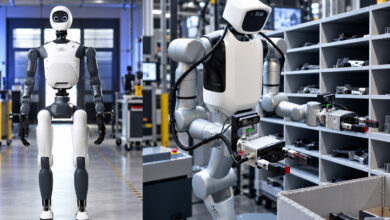
- Next-generation industrial robots and cobots
- Advanced automation systems
- Additive manufacturing solutions
- Predictive maintenance technologies
- Innovations related to industrial artificial intelligence
- Automated logistics platforms
This diversity makes it a true barometer of European industrial innovation.

Robotics does not replace
humans; it multiplies their
potential.
Robotics at the Heart of Industrial Transformation
For Robot Magazine readers, robotics remains one of the main points of interest at the show. The stands dedicated to robotics and automation are among the most dynamic of the event.
International companies such as ABB Robotics, KUKA, Fanuc, and Universal Robots regularly showcase their latest innovations here.
Visitors can observe robots in action:
- Assembling mechanical parts
- Handling electronic components
- Collaborating with human operators
- Automating production lines
These demonstrations provide a concrete understanding of how robotic technologies are now integrated across all industrial sectors: automotive, aerospace, electronics, logistics, and food production.
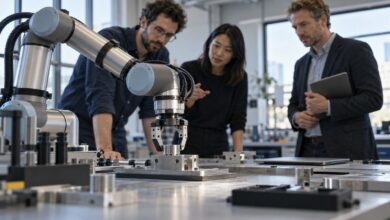
Collaborative robotics, in particular, is growing in importance. Cobots allow companies of all sizes, including SMEs, to automate certain tasks while maintaining close interaction with human operators.
Industry 4.0: The Convergence of Robots, Data, and AI
Beyond robotics, Global Industrie highlights the major trends of Industry 4.0.
Today, factories are no longer just automated; they are becoming connected, intelligent, and data-driven. Industrial sensors, vision systems, AI, and software platforms play an increasingly central role in process optimization.
The show offers a concrete glimpse into this technological convergence.
Visitors can discover:
- Predictive maintenance solutions based on data analysis
- Digital twins for simulating production lines
- Industrial control platforms integrating AI
- Autonomous logistics systems using mobile robots and AGVs
This digital transformation is now a strategic challenge for European industry, which faces competitiveness, energy transition, and technological sovereignty issues.
A Hub for Industry Stakeholders
Global Industrie is not just an exhibition. It is also a space for networking and sharing experiences.
Numerous conferences and roundtables address major current industrial issues:
- Industrial reshoring
- Energy transition
- SME automation
- Technical skills shortages
- AI’s impact on industrial professions
These discussions are valuable for decision-makers seeking to anticipate sector developments and identify technologies that can enhance organizational performance.
The event also welcomes deep-tech startups developing tomorrow’s industrial technologies, offering visitors the chance to discover promising innovations that are still little known.
A Must-Attend Event for Professionals
For engineers, industrial leaders, and tech entrepreneurs, Global Industrie offers a unique opportunity to take the pulse of industrial innovation.
In just a few days, attendees can:
- Observe the latest robotic advancements
- Meet suppliers and technology partners
- Network with industry leaders
- Identify new collaboration opportunities
In a context where automation, AI, and robotics are transforming industrial models, events like this play a key role in connecting ecosystem players.
Robot Magazine explores the
technologies shaping the industry
of tomorrow.
Robot Magazine at the Heart of the Event
In a context marked by accelerating automation, the rise of industrial AI, and technological sovereignty challenges, Robot Magazine will focus on advanced robotics, factory digitalization, and the transition to a more sustainable industry. Visitors will discover demonstrations of next-generation industrial robots, collaborative cobots, predictive maintenance solutions, and AI-based industrial control platforms.
Numerous conferences and roundtables will also bring together industrial leaders, researchers, and startups to explore deep transformations in the manufacturing sector. For professionals in robotics and automation, this 2026 edition is a unique opportunity to discover the technologies that will shape the factories of tomorrow and to meet key players in the European industrial ecosystem.
As a media partner of Global Industrie, Robot Magazine will cover the show’s standout innovations.
Our teams will meet with industrialists, startups, and experts to share with our readers:
- Interviews with executives and engineers
- Analyses of robotics trends
- Technology demonstrations
- Reports from the heart of the exhibition halls
Our goal is simple: to highlight the technologies shaping tomorrow’s industry and give a voice to the actors driving this transformation.
See You at Global Industrie
Whether you are an engineer, entrepreneur, integrator, or simply passionate about industrial technologies, Global Industrie offers a unique chance to discover innovations reshaping the industrial landscape.
Robotics, AI, and automation are no longer futuristic concepts; they are at the core of industrial strategies.
And this is exactly what you will be able to observe, understand, and experience at this unmissable European industrial event.
FAQ – Global Industrie 2026 and Robot Magazine
2. Who attends this event?
Engineers, industrial leaders, integrators, researchers, and robotics enthusiasts. More than 2,000 exhibitors and tens of thousands of visitors come to network and discover industrial trends.
3. What can visitors expect to see?
Attendees can explore industrial robots and collaborative cobots, advanced automation systems, additive manufacturing solutions, predictive maintenance technologies, innovations in industrial artificial intelligence, and automated logistics platforms.
4. Why is robotics a central focus of the event?
Robotics, especially collaborative robotics, is transforming production lines. Visitors can witness robots assembling mechanical parts, handling electronic components, collaborating with human operators, and automating industrial processes.
5. How is Industry 4.0 represented?
Global Industrie highlights the convergence of robots, data, and artificial intelligence. The show features predictive maintenance solutions based on data analytics, digital twins to simulate production lines, industrial control platforms integrating AI, and autonomous logistics systems using mobile robots and AGVs.
6. What networking opportunities does the show offer?
Conferences and roundtables cover industrial reshoring, energy transition, SME automation, skills shortages, and AI’s impact on industrial jobs. The show also highlights deep-tech startups, offering attendees a chance to discover emerging industrial technologies.
7. How does Robot Magazine cover the event?
As a media partner, Robot Magazine provides interviews with executives and engineers, trend analyses in robotics, technology demonstrations, and on-site reporting from the exhibition.
8. Why attend Global Industrie?
This event allows visitors to see the latest technological advances, meet partners and industry leaders, and identify collaboration opportunities in a context where automation and artificial intelligence are profoundly transforming industry.