
The Robotics Market in Belgium
Belgium is quietly but steadily establishing itself as one of the rising players in European robotics. While it does not yet compete with Germany, Switzerland, or France in terms of installation volume, the country stands out for its agility, the richness of its research ecosystem, and its ability to innovate in highly targeted segments such as software robotics, service robotics, and collaborative robots.
Thanks to technological Flanders, the dynamism of industrial Wallonia, and the strategic position of Brussels, Belgium has become a preferred testing ground for European companies wishing to trial robotic solutions in human-scale markets.
Robot-Magazine.fr provides a comprehensive analysis of the Belgian market, its key players, a comparison with France, and possible market entry strategies for industrial companies and integrators.
A Market with Sustained Growth
The Belgian robotics market is valued at several hundred million euros, with an estimated average annual growth of 7–9% according to industry sources. The industrial robotics segment, which represents the largest share of the market, is expected to exceed $250 million by 2028, according to the Assembly Line Robots Market Belgium 2023–2028 report.
Several factors drive this growth:
-
The transition to Industry 4.0
-
Labor shortages in certain technical professions
-
The desire to improve productivity and safety
-
Strong innovation policies supported by regional authorities
Belgium’s robot density (robots per 10,000 manufacturing employees) remains lower than that of its Swiss and German neighbors but has been steadily increasing since 2019, especially in the automotive, logistics, pharmaceutical, and food sectors.
The presence of world-class universities (KU Leuven, ULiège, ULB) and research centers specializing in mechatronics and artificial intelligence strengthens the competitiveness of the local ecosystem.
A Dynamic and Well-Structured Ecosystem
Belgium has invested in a collaborative model between universities, start-ups, and industry, giving rise to a series of innovative companies and technology hubs recognized across Europe.
EEVE: Belgian Consumer Robotics
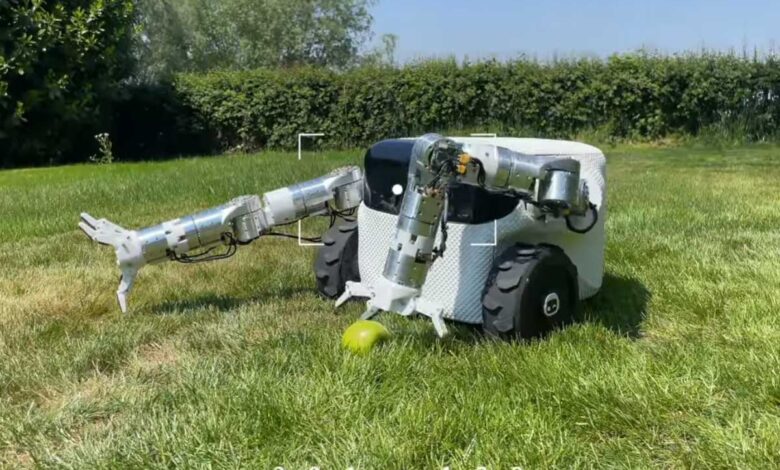
Based in Waregem (Flanders), EEVE – formerly The Toadi Order – develops Willow, an intelligent autonomous lawnmower robot capable of mapping its environment without cables or GPS signals. The company perfectly illustrates Belgium’s ability to combine robotics, embedded AI, and accessible design.
By focusing on domestic robotics, EEVE has positioned itself in a segment where few European players compete with Asian giants.
Intermodalics: Software Powerhouse
Located in Leuven, Intermodalics specializes in robot control software (Orocos, ROS-Industrial). Its tools are used by European industrial companies and integrators to operate robotic arms or multi-robot systems.
The company highlights one of Belgium’s major strengths: software expertise and compatibility with open market standards.
Zorabots: Assistance and Reception Robotics
Founded in Liège, Zorabots is one of the best-known faces of Belgian robotics. Specializing in humanoid robots for education, healthcare, and reception, the company has collaborated with international partners including SoftBank Robotics and now deploys its solutions in more than 60 countries.
Zorabots illustrates Belgium’s export ambition, combining local innovation with global reach.
Dematic & KUKA Belgium: Integrated Industrial Robotics
In industrial robotics, several international subsidiaries (such as Dematic, KUKA Belgium, or ABB Benelux) have established logistics or integration centers in Belgium.
These players benefit from a favorable environment for warehouse automation, particularly in the ports of Antwerp and Zeebrugge, two of the most robotized logistics platforms in Europe.
Belgium vs. France: Two Different Strategies
While France and Belgium share cultural and industrial proximity, their robotics markets differ significantly.
| Criterion | Belgium | France |
|---|---|---|
| Market Size | About $250–300M (2028 proj.) | About $1.2B (2024 proj.) |
| Annual Growth | 7–9% | 10–12% |
| Dominant Segments | Logistics, pharma, soft robotics, cobots | Automotive, aerospace, food, services |
| Ecosystem | Highly collaborative, agile, interregional | Structured around major hubs (Lyon, Nantes, Paris) |
| Positioning | Niche, innovation, flexibility | Volume, industrialization, export |
| Public Investment | Regional support (Wallonia, Flanders) | France 2030 Plan, national subsidies |
| Flagship Players | EEVE, Zorabots, Intermodalics | Exotec, Effidence, Aldebaran, Génération Robots |
In short, France dominates in size, but Belgium attracts attention with its agility.
Belgian robotics stands out for high-value, exportable products, often developed in lean structures capable of quickly pivoting between markets (industry, healthcare, education, services).
For a foreign investor or supplier, Belgium can serve as a European-scale laboratory: a trilingual country with a skilled workforce, a competitive tax framework, and cultural openness toward France, Germany, and the Netherlands.
How to Enter the Belgian Robotics Market
Entering the Belgian market requires a gradual approach, adapted to the local industrial structure and the expectations of companies, often SMEs.
1. Leverage Regional Clusters
-
Flanders Make (Lommel, Kortrijk, Leuven): Research center specializing in advanced production systems, autonomous vehicles, and industrial robotics.
-
Wallonia Digital Innovation Hub: Supports SMEs in digital and robotic transformation.
-
Agoria Robotics & AI Community: Belgian technology federation facilitating exchanges between integrators, start-ups, and universities.
These structures provide rapid access to integrator networks and European or regional project calls.
2. Target Local SMEs and Integrators
Unlike France, where large groups structure the market, Belgium has a majority of SMEs. Solutions should therefore be modular, collaborative, and affordable.
Collaborative robots (Universal Robots, Fanuc CRX, etc.) sell well when integrated by local players like Robojob (Turnhout), offering plug-and-play automation solutions for machining.
3. Emphasize Proximity and Flexibility
The Belgian market values responsiveness and customization. Having a local presence or a Belgian partner is a major advantage. Demonstrators, regional trade shows (like Indumation in Kortrijk), and pilot projects are the best market entry levers.
4. Focus on Export from Belgium
Belgium can serve as a European hub: its geographic position and multilingual culture (French, Dutch, English) facilitate expansion to France, the Netherlands, and Germany.
Several foreign companies choose Brussels or Antwerp for their European headquarters to combine favorable taxation with quick access to major neighboring markets.
Trends to Watch
-
Soft Robotics: Investment in flexible materials, bio-inspired robotics, and medical applications.
-
Logistics Robotics: Strong port activity and e-commerce drive demand for sorting and packaging robots.
-
Cobotics for SMEs: Small industrial structures adopt collaborative arms to address labor shortages.
-
AI and Industrial Vision: Belgian universities are multiplying spin-offs in visual perception, cognitive robotics, and predictive maintenance.
Belgium, due to its size, is not intended to become a volume market but can become a source of exportable innovation. This technological added value attracts international partnerships and investors.
Belgium is now establishing itself as a European laboratory for intelligent robotics. Its agile industrial fabric, strong academic foundation, and discreet but high-performing champions (Zorabots, EEVE, Intermodalics, Robojob) make it fertile ground for testing and deploying new generations of robots.
Compared to France, Belgium offers a more flexible, collaborative, and often faster-to-implement approach. For companies seeking to enter this market, success lies in proximity, regional partnerships, and the ability to tailor solutions to the concrete needs of local SMEs.
In a Europe seeking industrial and technological autonomy, Belgium could become a catalyst for tomorrow’s robotics: agile, interconnected, and human-centered in its vision of automation.
FAQ – The Market, Key Players, and Trends
What are Belgium’s geographic and regional advantages?
Thanks to technological Flanders, the dynamism of industrial Wallonia, and the strategic position of Brussels, Belgium offers an ideal testing ground for European companies looking to trial robotic solutions in human-scale markets.
How is the Belgian robotics market evolving?
The Belgian market is experiencing sustained growth, valued at several hundred million euros with an average annual growth of 7–9%. Industrial robotics represents the largest market share and is expected to exceed $250 million by 2028. Drivers of this growth include the transition to Industry 4.0, labor shortages in certain technical professions, the need to improve productivity and safety, and regional innovation policies.
What is Belgium’s robot density compared to its neighbors?
Belgium’s robot density, measured by the number of robots per 10,000 manufacturing employees, remains lower than that of Switzerland and Germany but has been steadily increasing since 2019, particularly in the automotive, logistics, pharmaceutical, and food sectors.
Who are the key Belgian players and innovators in robotics?
EEVE develops Willow, an autonomous lawnmower robot combining robotics and embedded AI.
Intermodalics focuses on robot control software and open market standards.
Zorabots creates humanoid robots for education, healthcare, and reception, deployed in over 60 countries.
In industrial robotics, international subsidiaries like Dematic, KUKA Belgium, and ABB Benelux benefit from Belgium’s favorable automation environment, particularly in the ports of Antwerp and Zeebrugge.
How does the Belgian market compare to France?
France has a larger market, with 10–12% growth and a focus on large groups and industrialization. Belgium, by contrast, attracts attention with its agility, collaborative ecosystem, and niche focus on innovative segments such as logistics, pharmaceutical, and collaborative robotics.
How can companies enter the Belgian robotics market?
Entering the Belgian market requires leveraging regional clusters such as Flanders Make, Wallonia Digital Innovation Hub, and Agoria Robotics & AI Community. It is recommended to target local SMEs and integrators with modular and collaborative solutions, emphasize proximity and flexibility through demonstrators and regional trade shows, and consider Belgium as a European hub to facilitate exports to France, the Netherlands, and Germany.
What trends should be watched?
Belgium is investing in soft robotics, logistics robotics, collaborative robots for SMEs, and AI applied to industrial vision and predictive maintenance. These sectors reflect the country’s focus on high-value, exportable, and agile robotics.
Why is Belgium considered a European robotics laboratory?
Belgium combines an agile industrial fabric, strong academic foundations, and innovative companies capable of pivoting quickly. This flexible and collaborative approach allows for testing and deploying new generations of robots, making the country a potential catalyst for the robotics of tomorrow in Europe.