
Humanoid-as-a-Service: The Next Step in Industrial Robotics
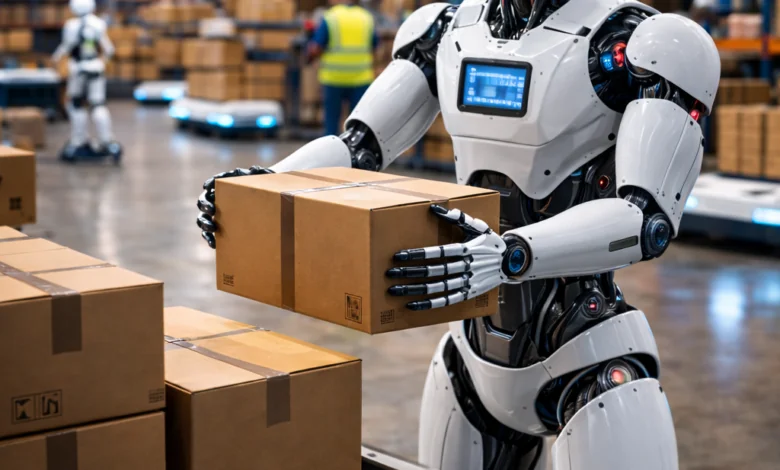
After Software as a Service (SaaS), Robot as a Service (RaaS) could soon give way to a new evolution: Humanoid-as-a-Service (HaaS).
In this emerging model, companies no longer purchase humanoid robots. Instead, they simply subscribe to robotic labor capacity, much like they already subscribe to cloud services or software today
With the arrival of humanoid robots developed by companies such as Tesla, Figure AI, Agility Robotics, and Apptronik, some industry players are already considering subscription-based business models.
If this trend continues, humanoid robots could profoundly transform the labor economy and create a market estimated at more than $100 billion in the coming decades.
What is Humanoid-as-a-Service?
Humanoid-as-a-Service (HaaS) is a model in which a humanoid robot is provided as a service rather than sold as a product.
Instead of purchasing a robot for several hundred thousand euros, a company could simply pay for:
-
A monthly subscription
-
An hourly rate
-
A cost per completed task
In this model, the provider manages:
-
The robot itself
-
Software updates
-
Maintenance
-
Integration
-
Algorithm improvements
The client company only pays for the actual use of the robot.
This approach transforms a heavy industrial investment into an operational expense, making the adoption of robotics significantly easier.

After SaaS and RaaS, Humanoid-as-a-Service
could represent the next economic
evolution of robotics.
Why Humanoid Robots Fit the “As-a-Service” Model
Humanoid robots have a unique characteristic: they are designed to operate in environments built for humans.
Unlike traditional industrial robots, which often require specialized infrastructure, humanoids can theoretically:
-
Walk through a warehouse
-
Handle objects
-
Use tools
-
Transport packages
-
Work alongside human workers
This flexibility makes humanoid robots particularly compatible with on-demand service models.
For example, a company could rent a humanoid robot to:
-
Handle a logistics activity peak
-
Temporarily compensate for a labor shortage
-
Automate repetitive tasks
Companies Exploring This Model
Several companies developing humanoid robots could adopt a Humanoid-as-a-Service model.
Tesla
Tesla is developing the humanoid robot Optimus, designed to work in factories and warehouses.
Elon Musk regularly mentions the possibility of deploying these robots at large scale in industry.
A subscription-based model could accelerate their adoption.
Figure AI
The startup Figure AI is developing the humanoid robot Figure 01, with the goal of deploying these machines in industrial environments.
The company has attracted strong investor attention after raising hundreds of millions of dollars.
Its business model could evolve toward on-demand robotics services.
Agility Robotics
Agility Robotics develops the humanoid robot Digit, designed for logistics and material handling.
Digit is already being tested in some warehouses to:
-
Transport packages
-
Automate certain operations
Apptronik
Apptronik develops the humanoid robot Apollo, designed for industrial applications.
The goal is to create a robot capable of assisting workers with physical tasks.
Industries That Could Adopt HaaS
Several sectors could quickly benefit from the Humanoid-as-a-Service model.
Logistics
Warehouses represent an ideal testing ground for humanoid robots.
They could:
-
Load and unload packages
-
Move goods
-
Prepare orders
-
Assist human operators
Manufacturing
In factories, humanoid robots could handle repetitive physical tasks.
They could also be used to operate in difficult or hazardous areas.
Services
In the longer term, humanoid robots could appear in:
-
Hotels
-
Airports
-
Hospitals
-
Shopping malls
They could assist human teams in logistics operations or customer support tasks.
A Potential Market Worth Over $100 Billion
Analysts believe humanoid robots could become one of the largest markets in robotics.
Several factors support this growth:
-
Labor shortages in many countries
-
Increasing productivity pressure
-
Advances in artificial intelligence
-
Gradual reductions in component costs
Some projections estimate a market exceeding $100 billion by 2040.
If the Humanoid-as-a-Service model becomes widespread, it could significantly accelerate this growth.
Logistics already represents an
ideal experimentation environment
for humanoid robots.
Toward a Robotic Labor Economy
The Humanoid-as-a-Service model could transform how companies access labor.
Instead of hiring employees for certain repetitive tasks, companies could simply subscribe to robotic workforce capacity.
We could eventually see:
-
Humanoid robots rented by the hour
-
Robots billed per task
-
Robot fleets managed through cloud platforms
This model fits within a broader shift toward an economy of automated services.
Challenges to Overcome
Despite its potential, the Humanoid-as-a-Service model still faces several challenges.
Robot Costs
Humanoid robots are still expensive to manufacture.
Reliability
To operate in industrial environments, these robots must be extremely reliable.
Energy Autonomy
Battery technology remains a limiting factor for extended operation.
Humanoid robots could represent the next major revolution in industrial robotics. By combining artificial intelligence, advanced robotics, and subscription-based economic models, the concept of Humanoid-as-a-Service could transform how companies access automation.
Instead of purchasing robots, companies may soon subscribe to robotic labor.
If this vision becomes reality, humanoid robots could create a new industry worth more than $100 billion and mark the beginning of a new automated labor economy.
FAQ – Humanoid-as-a-Service (HaaS)
2. Why are companies considering a subscription model for humanoid robots?
Companies are exploring this model because it transforms a heavy capital expenditure into a predictable operational expense. It lowers the financial barrier to entry, reduces technological risk, and allows businesses to scale robotic capacity up or down depending on operational needs.
3. Why are humanoid robots particularly suited to the “as-a-service” model?
Humanoid robots are designed to operate in environments built for humans. They can move through warehouses, manipulate objects, use tools, transport goods, and collaborate with workers without requiring major infrastructure changes. This flexibility makes them ideal for on-demand deployment.
4. Which companies are developing humanoid robots that could adopt HaaS?
Several companies are actively developing humanoid robots that could align with a service-based model, including Tesla with its Optimus robot, Figure AI with Figure 01, Agility Robotics with Digit, and Apptronik with Apollo. These companies are positioning humanoid robotics for large-scale industrial deployment.
5. Which sectors could adopt Humanoid-as-a-Service first?
Logistics and warehousing are among the most likely early adopters, as humanoid robots can assist with loading, transporting, and sorting goods. Manufacturing could also benefit from robots handling repetitive physical tasks or operating in hard-to-reach areas. In the longer term, service industries such as hospitality, airports, hospitals, and retail centers may integrate humanoid robots to support operational teams.
6. What is the potential market size for humanoid robotics?
Industry analysts estimate that humanoid robots could represent one of the largest segments of the robotics market. Driven by labor shortages, productivity pressures, advances in artificial intelligence, and declining hardware costs, projections suggest the market could exceed 100 billion dollars by 2040 if adoption accelerates.