
For decades, Europe has been one of the historical heartlands of industrial robotics. From Germany’s automotive plants to Italy’s packaging lines and France’s aerospace factories, robots have long been embedded in European manufacturing. But today, the continent is entering a new phase. Demand for robots is no longer driven solely by productivity gains. It is now fueled by structural labor shortages, energy transition, reshoring strategies, digitalization, and the rise of service and collaborative robotics.
For manufacturers worldwide, Europe is becoming one of the most attractive and demanding growth markets. This article explores why demand is accelerating, which sectors are leading adoption, and how robot manufacturers can position themselves to capture this opportunity.
A Structural Shift in European Industry
Europe’s robot demand is rooted in deep structural changes.
Labor shortages and aging workforce
Europe faces a rapidly aging population. In countries like Germany, Italy, and Spain, a significant share of skilled industrial workers will retire within the next decade. At the same time, fewer young workers are entering manufacturing and logistics.
Robots are no longer just about efficiency. They are becoming a workforce replacement and continuity solution, ensuring that factories, warehouses, and infrastructure can continue operating despite shrinking labor pools.
Reshoring and supply chain resilience
The pandemic, geopolitical tensions, and energy shocks exposed the fragility of global supply chains. Europe is now reshoring and nearshoring strategic production in sectors such as:
-
automotive and batteries
-
semiconductors and electronics
-
pharmaceuticals
-
defense and aerospace
-
food and critical materials
Automation and robotics are essential to make reshoring economically viable in high-cost labor markets.
Digital and green transformation
Europe’s industrial policy combines digitalization with decarbonization. Robots play a dual role:
-
enabling smart factories through data, connectivity, and AI
-
improving energy efficiency, precision, and waste reduction
 Europe is no longer just a birthplace
of industrial robotics it is becoming
its next great growth engine.
As Europe pushes toward carbon neutrality, robotics becomes a tool not just for productivity, but for sustainability.
From Industrial Robots to Intelligent Systems
The nature of demand is also evolving.
Traditional industrial robots remain essential for welding, painting, assembly, and handling. But growth is accelerating in:
-
collaborative robots (cobots) for SMEs and flexible lines
-
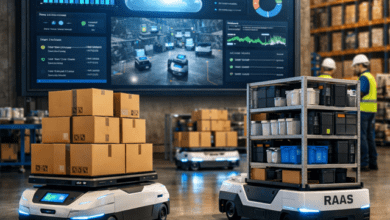
autonomous mobile robots (AMRs) for logistics and intralogistics
-
AI-powered inspection and quality control systems
-
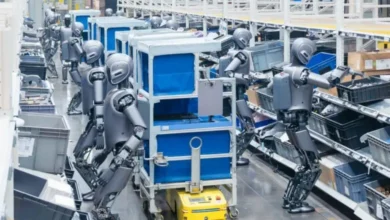
service robots in healthcare, retail, and hospitality
-
agricultural and construction robots addressing labor-intensive sectors
European customers increasingly expect robots to be:
-
easier to deploy
-
safer to operate
-
connected to IT and cloud systems
-
capable of learning and adapting
This shifts demand from pure hardware to integrated robotic solutions combining mechanics, AI, software, and services.
Key Sectors Driving Adoption
Automotive and battery ecosystems
Europe’s transition to electric vehicles is creating massive investment in new gigafactories and battery plants. These facilities require:
-
high-precision assembly
-
automated material handling
-
quality inspection
-
traceability systems
Robots are central to achieving scale, consistency, and cost control in EV and battery production.
Logistics and e-commerce
E-commerce growth and same-day delivery expectations are transforming warehouses and distribution centers. AMRs, robotic picking, and automated sorting systems are now standard in leading facilities.
Europe’s dense urban networks and strict labor regulations further accelerate the business case for automation.
Food, packaging, and consumer goods
Hygiene, traceability, and flexibility are key drivers in food processing and packaging. Robots capable of handling delicate products and rapid changeovers are increasingly in demand.
Healthcare and life sciences
Hospitals, labs, and pharma plants are adopting robots for:
-
material transport
-
sterilization
-
lab automation
-
surgical assistance
Europe’s healthcare systems face both staff shortages and rising demand, making robotics a strategic necessity.
SMEs and flexible manufacturing
Small and mid-sized manufacturers represent a huge untapped market. Cobots and modular automation systems enable them to automate without large capital investments or specialized robotics teams.
Europe’s High Bar: Safety, Compliance, and Trust
One defining feature of European robot demand is its emphasis on safety and compliance.
European buyers expect:
-
CE-certified robots
-
compliance with ISO 10218, ISO/TS 15066, and machinery standards
-
robust risk assessments
-
clear documentation and training
-
strong cybersecurity for connected systems
For manufacturers, this creates a double opportunity:
-
it raises barriers to entry for low-quality competitors
-
it rewards companies that invest in safety, quality, and transparency
European customers don’t just
buy machines. They buy confidence.
Trust is a key differentiator in Europe. Robots are not purchased purely on price, but on reliability, service, and long-term partnership.
Opportunities for Global Manufacturers
Europe’s growing demand opens multiple strategic opportunities.
Localization and customization
European industries are diverse, with strong local standards and practices. Manufacturers that offer:
-
localized interfaces and documentation
-
country-specific certifications
-
application-focused customization
gain a significant advantage.
Integrated solutions, not just robots
European customers increasingly seek end-to-end solutions: from design and simulation to deployment, maintenance, and optimization.
Manufacturers that combine hardware with:
-
AI software
-
digital twins
-
cloud platforms
-
analytics and predictive maintenance
can position themselves as solution partners rather than equipment vendors.
Partnerships and ecosystems
Working with European system integrators, distributors, and research institutes is critical. Local partners provide:
-
market access
-
regulatory expertise
-
application knowledge
-
service networks
Building ecosystems accelerates adoption and builds credibility.
Sustainability as a differentiator
Robots that help reduce energy consumption, waste, and emissions resonate strongly with European customers. Demonstrating environmental impact is becoming part of the sales argument.
Service and lifecycle business models
Europe values long-term support. Recurring revenue through:
-
maintenance contracts
-
software updates
-
monitoring services
-
training
creates durable customer relationships and predictable growth.
Challenges Manufacturers Must Address
The opportunity comes with challenges.
-
Regulatory complexity across EU directives and national rules
-
Fragmented markets with different languages and cultures
-
Strong incumbents such as ABB, KUKA, FANUC, and Yaskawa
-
Price pressure in cost-sensitive segments
-
Talent shortage in robotics engineering and integration
Success requires patience, local presence, and sustained investment.
The Strategic Context: Europe in the Global Robotics Race
Globally, Europe competes with:
-
China, scaling robotics at massive speed
-
The United States, leading in AI and platform innovation
-
Japan and Korea, excelling in precision and manufacturing
Europe’s strength lies in:
-
advanced industrial base
-
high safety and quality standards
-
strong research institutions
-
integration of robotics with sustainability goals
For manufacturers, aligning with Europe means aligning with a market that values long-term industrial resilience over short-term gains.
Looking Ahead: From Demand to Transformation
Over the next decade, Europe’s demand for robots will likely be shaped by:
-
continued labor shortages
-
expansion of EV, battery, and renewable sectors
-
automation of SMEs
-
growth of healthcare and service robotics
-
convergence of robotics, AI, and cloud platforms
Robots will move from isolated automation tools to core infrastructure of European industry and services.
Europe as a Strategic Growth Engine
Europe’s growing demand for robots is not a temporary cycle. It is the expression of a deeper transformation of how the continent produces, delivers, and sustains its economy.
For robot manufacturers, Europe offers:
-
a large and diversified market
-
high-value applications
-
strong willingness to invest in automation
-
and the chance to build long-term strategic positions
But it also demands excellence in safety, compliance, integration, and service.
Those who succeed will not only sell more robots. They will become partners in shaping Europe’s next industrial era.
FAQ – Europe’s Growing Demand for Robots
2. Which industries are driving robot adoption in Europe?
The strongest demand comes from automotive and battery manufacturing, logistics and e-commerce, food and packaging, healthcare and life sciences, and flexible manufacturing among SMEs. These sectors rely on robotics to achieve precision, scale, hygiene, speed, and adaptability while coping with workforce constraints and rising operational complexity.
3. How is European demand different from other regions?
Europe places a strong emphasis on safety, compliance, quality, and long-term reliability. Buyers expect CE certification, adherence to ISO standards, robust risk assessments, and strong cybersecurity. Unlike markets driven mainly by price or volume, European customers prioritize trust, service, and long-term partnership.
4. What types of robots are most in demand in Europe?
While traditional industrial robots remain essential, growth is accelerating in collaborative robots, autonomous mobile robots, AI-powered inspection systems, service robots in healthcare and hospitality, and robots for agriculture and construction. Demand is shifting toward intelligent, connected systems that integrate hardware, software, and AI.
5. Why is reshoring increasing the need for robotics?
Reshoring brings production back to high-cost labor markets. Robotics makes this economically viable by improving productivity, consistency, and cost control. Without automation, many reshoring projects would struggle to compete globally.
6. How does sustainability influence robot investments in Europe?
Europe’s push toward carbon neutrality means robots are increasingly valued for their ability to reduce waste, improve energy efficiency, optimize material usage, and enable greener production processes. Sustainability is becoming part of the business case, not just a compliance requirement.
7. What do European customers expect from robot manufacturers?
They expect more than machines. Customers look for integrated solutions that include design, simulation, deployment, software, AI, maintenance, training, and lifecycle support. Manufacturers are increasingly evaluated as solution partners rather than equipment suppliers.