
Embodied AI, 3D Vision, Fine Manipulation: The true Robotic breakthroughs
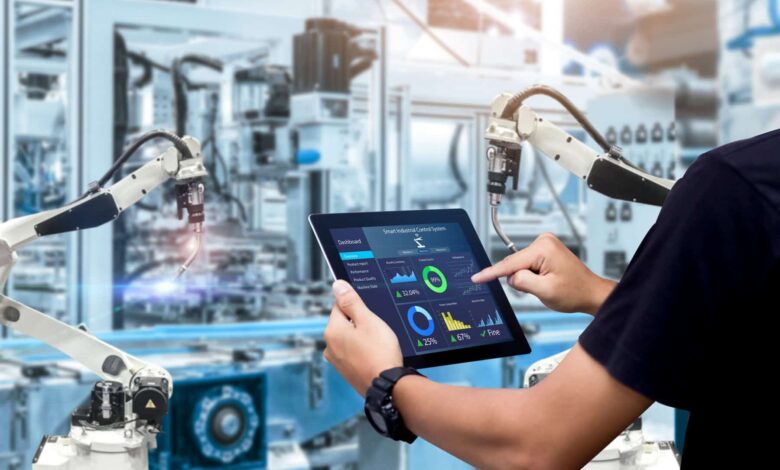
For several years, robotics has been evolving at a rapid pace. Yet, behind the spectacular announcements and impressive demonstrations, the real breakthroughs do not lie in the shape of robots or their humanoid appearance, but in three fundamental technological transformations: embodied AI, advanced 3D perception, and adaptive fine manipulation
These three building blocks redefine what a robot can understand, perceive, and execute in the real world. They mark the shift from programmed, rigid robotics to cognitive robotics, capable of operating in uncertain environments. For industry, this represents a major structural change.
Embodied AI: Where Intelligence Meets Physics
For a long time, artificial intelligence remained separate from the physical world. AI models excelled in data analysis, image recognition, or language processing, but they did not interact directly with matter.
Embodied AI changes this equation. It refers to systems where intelligence is integrated into a physical body capable of acting, experimenting, and learning through interaction. The robot no longer merely executes instructions; it adapts its actions based on sensory feedback.
Platforms like those developed by NVIDIA, with their advanced simulation environments, or the integrated robotic architectures offered by Tesla and Boston Dynamics, illustrate this evolution. AI is no longer an external module: it is embedded, connected to sensors, motors, and actuators.
This embodiment enables learning through real or simulated interaction. The robot can test strategies, correct its mistakes, and optimize its trajectories. Intelligence becomes dynamic, contextual, and adaptive.
3D Vision: Understanding Space Rather Than Mapping It
Traditional robotic vision relied on controlled environments: floor markings, standardized parts, calibrated lighting. Systems were effective but poorly tolerant of variation.
Next-generation 3D vision disrupts this approach. Thanks to stereoscopic cameras, depth sensors, miniaturized LiDARs, and spatial reconstruction algorithms, robots can now interpret complex environments in real time.
They no longer just recognize a part; they evaluate its exact position, orientation, dimensions, and interaction with other objects. This capability is crucial for:
-
Automated logistics
-
Flexible assembly
-
Handling non-standard objects
-
Safe human interaction
3D vision allows robots to move from a predefined world to a partially unpredictable one. It reduces reliance on rigid infrastructure and paves the way for more flexible automation.

Intelligence is no longer external
to the robot: it is integrated, sensory,
and adaptive.
Fine Manipulation: The Most Complex Frontier
While locomotion has long been seen as the main robotic challenge, fine manipulation is actually one of the hardest obstacles to overcome.
Grasping a fragile object, screwing a component, handling a cable, or adjusting a flexible part requires subtle coordination between perception, computation, and motor control. Human hands have thousands of biological sensors and unmatched dexterity.
New generations of robots integrate high-precision force sensors, multi-jointed grippers, and algorithms capable of adjusting pressure in real time. Manipulation no longer relies solely on a predefined trajectory but on continuous adaptation.
This technological breakthrough makes it possible to automate tasks previously reserved for skilled operators: delicate assembly, complex sorting, light maintenance, and preparing varied orders.
The Convergence of the Three Breakthroughs
It is the combination of embodied AI, 3D vision, and fine manipulation that creates the true breakthrough. Individually, each represents an advancement. Together, they transform the very nature of the robot.
A robot with 3D vision but no adaptive intelligence remains limited. A powerful AI without reliable perception is blind. A skilled hand without contextual understanding lacks relevance. The convergence of these building blocks creates systems capable of:
-
Perceiving an unstructured environment
-
Choosing an appropriate strategy
-
Executing precise actions while accounting for sensory feedback
This synergy forms the core of next-generation robotics.
Impact on the Factory of the Future
In industrial contexts, these breakthroughs allow us to move beyond rigid, ultra-specialized lines. Robots become capable of handling shorter runs, customized products, and variable flows.
The factory evolves toward a modular and adaptive model. Intelligent robots can be reconfigured more quickly, learn new tasks through demonstration, and cooperate with human operators.
This flexibility directly addresses contemporary challenges: market volatility, skill shortages, higher quality demands, and cost pressures.
Still Structuring Limits
Despite these advances, several challenges remain. System robustness in highly disrupted environments still needs consolidation. Learning in real conditions requires strict safeguards to avoid unforeseen behaviors.
Cybersecurity is also a major concern: a connected, intelligent robot represents a potential attack surface. Certification of systems integrating adaptive AI raises complex regulatory questions.
Technological breakthroughs do not mean immediate maturity. They indicate an irreversible trajectory.
A Structured Global Competition
The United States, Europe, and Asia are investing heavily in these technologies. Advanced simulation platforms, specialized processors for embedded AI, and cloud infrastructures dedicated to robotics accelerate development.
The race is no longer only about raw performance but about the ability to industrialize these innovations at scale. Success will depend as much on software mastery as on production capability.
AI, perception, and manipulation:
alone, they advance; together, they
revolutionize robotics.
Toward Widespread Cognitive Robotics
Embodied AI, 3D vision, and fine manipulation are not merely incremental evolutions. They mark the shift toward cognitive robotics, capable of operating in dynamic environments.
This transformation does not mean robots will become autonomous in the human sense. It means they will be able to perform varied tasks with minimal but sufficient contextual understanding to act effectively.
Industry, logistics, healthcare, and services will be gradually impacted.
The True Breakthroughs Are Invisible
The most decisive advances in robotics are not always visually spectacular. They lie in invisible technological layers: learning algorithms, high-precision sensors, real-time control architectures.
Embodied AI gives robots adaptive capacity. 3D vision provides fine spatial understanding. Precise manipulation allows credible interaction with matter.
Together, these breakthroughs redefine the realm of possibility. They do not promise total automation but smarter, more flexible, and more integrated automation.
Robotics is entering a new phase: one where performance is measured not only in speed or strength, but in the ability to understand and act in the real world.
FAQ – Embodied AI, 3D Vision, and Fine Manipulation: Key Robotic Breakthroughs
2. Why is embodied AI a technological breakthrough?
It represents the shift from rigid, pre-programmed robots to adaptive systems. Robots no longer just follow instructions; they experiment, correct mistakes, and optimize behavior based on context.
3. Why is 3D vision essential in modern robotics?
3D vision enables robots to understand space in depth: position, orientation, dimensions, and object interactions. Using depth sensors and spatial reconstruction algorithms, robots can operate in complex and partially unpredictable environments.
4. What is fine manipulation and why is it a major challenge?
Fine manipulation involves handling fragile, flexible, or irregular objects with precision. It requires advanced coordination between perception, computation, and motor control, with continuous adaptation of force and trajectories.
5. Why is the convergence of embodied AI, 3D vision, and fine manipulation critical?
The combination of these technologies is transformative. Together, they allow robots to perceive unstructured environments, make context-aware decisions, and execute precise actions while continuously processing sensory feedback.
6. How do these innovations impact the factory of the future?
They enable flexible and modular production. Robots can handle short runs, customized products, and variable workflows, collaborate with human operators, and quickly adapt to changing market conditions.