
CNRS Strengthens French Robotic Sovereignty with France 2030
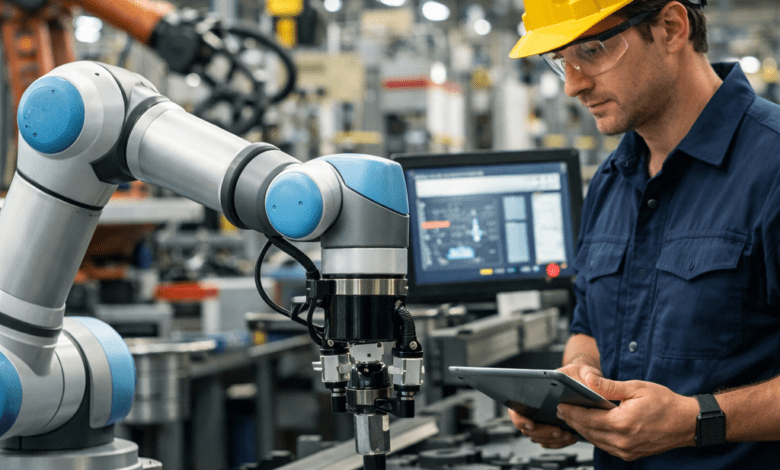
French robotics is entering a new strategic phase. On February 3, the CNRS officially launched an ambitious research program as part of the France 2030 plan. With a budget of €30 million over six and a half years, this initiative aims to remove the scientific and technological barriers that still limit robotic system performance, while integrating the imperatives of energy efficiency and artificial intelligence
Operated by the National Research Agency (ANR), the program falls under the national strategy “Robotics and Intelligent Machines.” The goal is clear: strengthen French technological sovereignty, structure the ecosystem, and accelerate the transfer of fundamental research into concrete industrial applications.
Why is this robotics program strategic for France?
Robotics is now at the heart of major industrial, energy, and societal transitions. Yet, several challenges remain:
- Navigation in complex environments
- Precise manipulation of diverse objects
- Robust perception in dynamic environments
- Energy autonomy
- Smooth AI integration
The new CNRS program aims to develop hardware and software technological building blocks capable of:
- Improving locomotion and control
- Enhancing perception and adaptability
- Optimizing physical manipulation
- Reducing energy consumption
- Increasing decision-making autonomy
Underlying all this is a major goal: designing robots that are more reliable, adaptable, and efficient, in line with France 2030’s decarbonization objectives, which dedicate 50% of investments to ecological transition.
Four Structuring Projects to Unlock Scientific Barriers
The program is organized around four major projects, each targeting a strategic technological challenge.
HAMMER: Autonomous Locomotion in Complex Environments
HAMMER aims to transform navigation capabilities of ground and aerial robots.
By combining:
- Advanced mathematical models
- Optimal control
- Learning based on large datasets
researchers aim to enable robots to move reliably in open, unstable, or poorly structured environments.
Targeted applications:
- Exploration of natural environments
- Offshore maintenance
- Operations in isolated or hazardous areas
- Inspection of critical infrastructure
The challenge is twofold: technical performance and reducing human exposure to risks.
DRMI: Next-Generation Industrial Robotic Manipulation
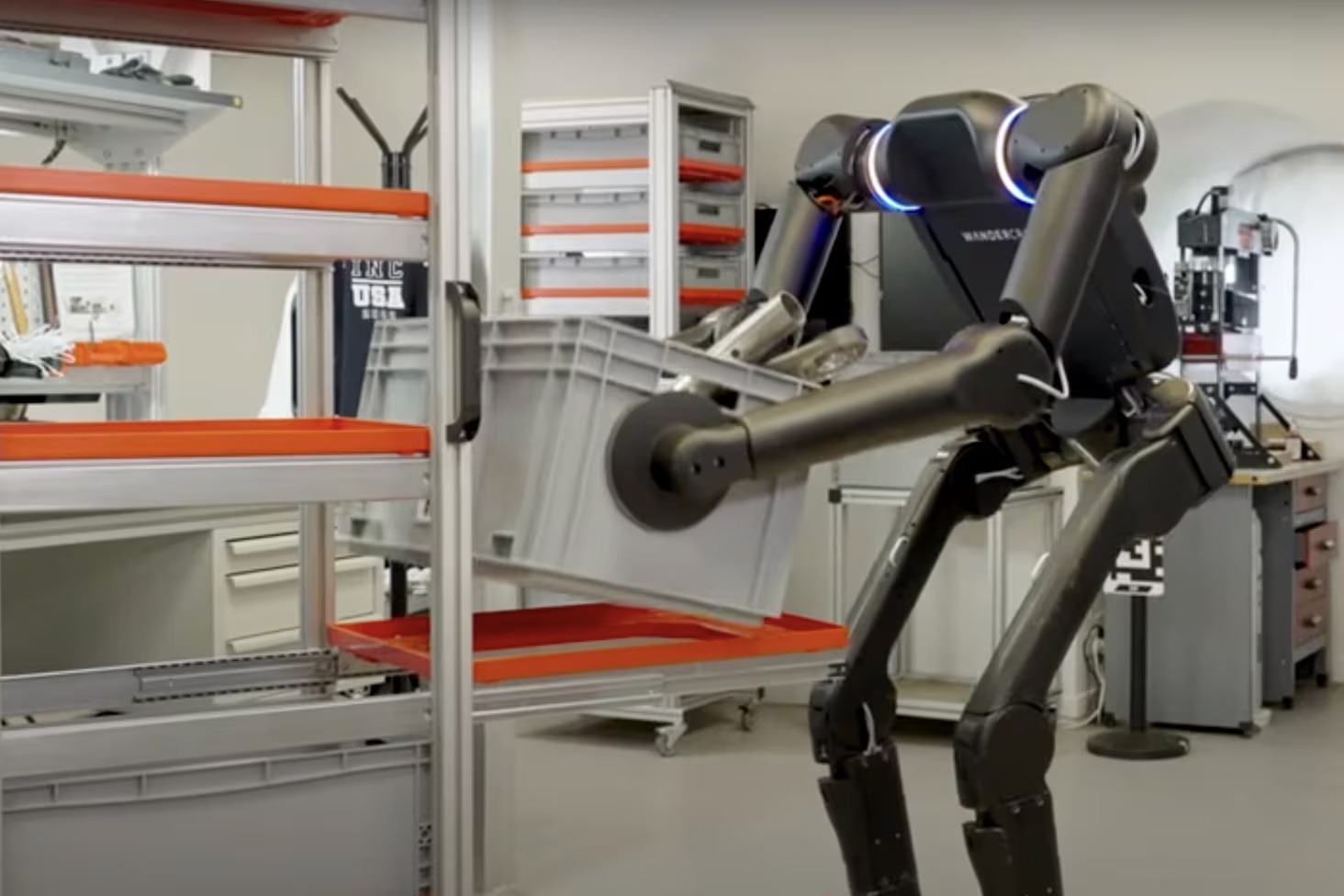
The DRMI project tackles the core of industrial robotics: physical manipulation.
Objective: develop robots capable of interacting with their environment with greater precision, flexibility, and reliability.
Relevant areas:
- Assembly and disassembly
- Automated sorting
- Recycling
- Industrial waste dismantling
In the context of a circular economy and reindustrialization, these advances could strengthen French industrial competitiveness.
PERSEO: Multi-Robot Perception and Cooperation
PERSEO focuses on perception, localization, and mapping in evolving environments.
A key axis: cooperation between ground, aerial, and mobile robots capable of sharing and merging their data.
Potential applications:
- Monitoring natural ecosystems
- Intelligent energy management
- Disaster detection and mitigation
- Autonomous transport
Data sharing between robots opens the way to more robust and intelligent distributed systems.
MINIRO: Micrometer-Scale Miniature Robotics
With MINIRO, research moves to the micrometer scale.
Between a few tens of micrometers and a few centimeters, physical laws change. Actuation and perception systems must be rethought.
Major prospects:
- Minimally invasive medical devices
- Robotic endoscopy
- Industrial inspection in constrained environments
- High-precision micro-manipulation
Miniature robotics could become a strategic lever in biomedicine and advanced inspection technologies.
Strategic Integration of Artificial Intelligence
A fifth transversal project is in preparation: “AI-Core-Robotics.”
Its ambition: deeply integrate AI into robotic architectures.
The rise of foundation models and generative AI opens the way for robots capable of:
- Interpreting natural language instructions
- Understanding their contextual environment
- Continuous learning
- Combining sensory and motor data to execute complex tasks
This represents a paradigm shift: moving from programmed robots to robots capable of adaptive reasoning.
This project will mobilize interdisciplinary convergence between:
- Computer science
- Mechatronics
- Micro-nanotechnologies
- Signal processing
- Materials science
- Human-machine interaction
Training Talent and Structuring the Robotics Ecosystem
Beyond technological advances, the program carries a human and strategic ambition.
Four challenges structure this vision:
- Develop technological building blocks transferable to industry
- Strengthen links between national and European actors
- Train young people in hybrid robotics–AI professions
- Attract new talent to the sector
In a context of increased competition with the United States and Asia, France must consolidate its scientific and industrial attractiveness.
France 2030: An Unprecedented Investment Framework
The France 2030 plan represents €54 billion in investments to sustainably transform strategic sectors:
- Health
- Energy
- Automotive
- Aerospace
- Space
- Industry
Robotics occupies a central place, at the intersection of:
- Ecological transition
- Industrial sovereignty
- Intelligent automation
- Reindustrialization
Program management is overseen by the General Secretariat for Investment, with support from ANR, ADEME, Bpifrance, and Banque des Territoires.
What This Means for the French Robotics Industry
With this program, CNRS is not just funding academic projects. It:
- Structures an ecosystem
- Aligns research and industry
- Prepares the next generation of intelligent robotic systems
- Strengthens France’s position in global competition
In a context marked by the rise of AI, industrial robotics growth, and international competition, France demonstrates a clear ambition: not to undergo the robotic revolution, but to help drive it.
For the French robotics sector, 2026 could mark the beginning of a new strategic cycle a cycle where technological performance, energy efficiency, and artificial intelligence converge toward more autonomous, sustainable, and competitive robotics.
FAQ – France’s New Robotics Program France 2030
2. What scientific challenges does the program seek to address?
Key challenges include navigation in complex environments, precise manipulation of diverse objects, robust perception in dynamic settings, energy autonomy, and seamless AI integration.
3. What are the flagship projects of the program and their objectives?
Four major projects are planned:
HAMMER: autonomous locomotion in complex environments.
DRMI: next-generation industrial robotic manipulation.
PERSEO: multi-robot perception and cooperation.
MINIRO: microrobotics for medical and industrial applications.
4. What role does artificial intelligence play in the program?
The transversal project “Cœur-IA-Robotique” aims to deeply integrate AI into robotic architectures, enabling robots to learn, understand their environment, and perform complex tasks with adaptive reasoning.
5. What industrial applications are targeted by this research?
Applications include natural environment exploration, offshore maintenance, industrial assembly, recycling, ecosystem monitoring, energy management, minimally invasive medical devices, and advanced industrial inspection.
6. How does this program help structure the French robotics ecosystem?
It develops technology bricks transferable to industry, strengthens national and European collaboration, trains young talent in hybrid robotics-AI roles, and attracts new talent to the sector.