
The Rise of Cleaning Robots
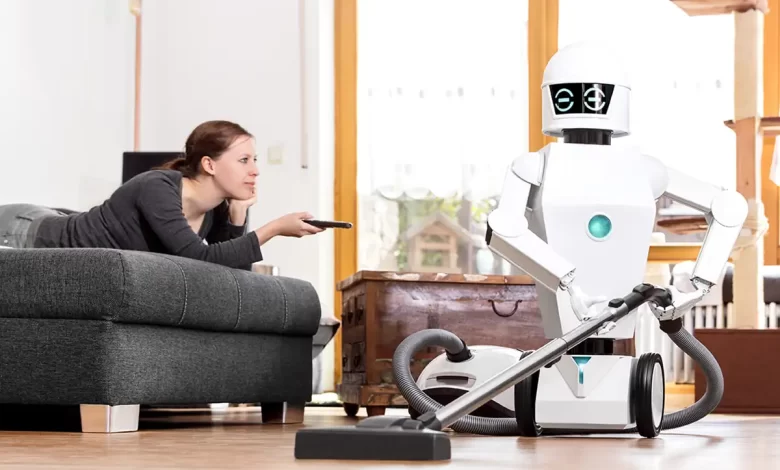
Robotic cleaning is no longer a gadget reserved for tech-savvy households. Today, it stands as a concrete solution to global challenges: labor shortages, rising service costs, stricter sanitary requirements, and ecological pressure. Cleaning robots are now deployed in shopping malls, airports, hospitals, hotels, logistics warehouses, and even solar farms promising efficiency, consistency, and cost reduction.
According to several studies, the global robotic cleaning market was worth around $6 billion in 2024 and could surpass $20 billion by 2030. This exponential growth illustrates the gradual shift of both professional and domestic hygiene towards robotic autonomy.
Market Size and Segments
1.1 A fast-growing market
The robotic cleaning market is highly diverse: it includes both consumer robots (vacuum cleaners, floor scrubbers, window cleaners) and professional solutions (autonomous scrubbers, UV disinfection robots, solar panel cleaners). In 2024, estimates ranged from $6 to $12 billion, depending on the scope considered. Despite discrepancies, all sources agree on one point: annual growth exceeds 20%, with the market expected to reach at least $21 billion by 2030.
The most dynamic sub-segments are professional scrubber robots, widely used in supermarkets and warehouses, which are growing by 10–12% annually. UV disinfection robots, popularized during the Covid-19 pandemic, are expanding at nearly 19% per year. Finally, solar panel cleaning robots represent an emerging market already valued at close to $1 billion, supported by the global boom in photovoltaics.
1.2 The consumer market
While the general public still associates robotic cleaning with robot vacuums, this segment has evolved significantly. New models now combine vacuuming, wet mopping, smart mapping, and object recognition. Brands such as Roborock, Dreame, and Ecovacs integrate AI to avoid cables, identify toys, or detect spilled liquids. Some prototypes go further, experimenting with stair climbing or even picking up small objects with robotic arms. The residential market is becoming a testing ground for innovations that will soon influence professional applications.
Real-World Use Cases
2.1 Supermarkets and warehouses
In retail and logistics, cleaning is a major repetitive cost. Robotic scrubbers perfectly address this need. Companies like Tennant and Brain Corp crossed the symbolic milestone of 10,000 robotic scrubbers sold in 2025, demonstrating massive adoption. These machines clean thousands of square meters per hour, ensure complete traceability, and reduce dependence on scarce labor. They also improve workplace safety by freeing employees from the most strenuous tasks.
2.2 Hospitals and UV disinfection
The pandemic transformed disinfection practices. UV robots such as those from UVD Robots and Xenex are now used in hospitals, nursing homes, and clinics. In just minutes, they sterilize an entire room by destroying bacteria and viruses with irradiation. This market, valued at $3.6 billion in 2023, is expected to grow rapidly, driven by global health concerns and stricter regulations. Their key advantage: traceability, with every cycle recorded and certified to guarantee hygiene standards.
2.3 Solar energy
The massive expansion of renewables is creating new maintenance needs. Photovoltaic panels lose up to 30% of efficiency when covered in dust or sand, a critical issue in desert regions. Specialized robots from Ecoppia or SolarCleano provide regular, often waterless cleaning, operating autonomously on rails. The market, valued at about $1 billion in 2024, is set for strong growth alongside global solar expansion.
2.4 Residential market
In households, robot vacuums have become mainstream. The latest models resemble true autonomous household assistants. With automatic charging and emptying stations, combined functions (vacuum + mop), and modules capable of crossing higher thresholds, these devices aim to minimize human intervention. This segment benefits from ongoing improvements in sensors, embedded AI, and batteries, making robots more powerful and affordable.
Key Technologies
3.1 Navigation and sensors
Modern robots use advanced navigation technologies combining LIDAR, cameras, and ultrasonic sensors. This enables precise mapping, optimized cleaning routes, and obstacle avoidance, making them safe to use in complex human environments like airports and malls.
3.2 Artificial intelligence
AI is at the core of the robotic cleaning revolution. Through machine learning, robots adapt to different floor types, identify heavily soiled areas, and adjust behavior in real time. This autonomy boosts efficiency while reducing energy and water consumption.
3.3 Fleet management and data
For large enterprises, cleaning is no longer just a task but a measurable process. Robots integrate fleet management systems, allowing supervisors to monitor multiple units from a centralized interface. Managers can track performance, analyze cleaning times, and export reports to demonstrate compliance with standards.
3.4 Hardware innovation
Material progress is equally important: longer-lasting batteries, quieter motors, modular parts, and eco-friendly solutions reducing chemical use. Some professional robots are designed for 24/7 operation, with fast-charging systems and preventive maintenance contracts.
Opportunities and Challenges
4.1 Advantages
Robotic cleaning offers numerous strategic benefits:
- Continuous cleaning, even at night, without supervision.
- Uniform and traceable results.
- Improved worker safety by reducing exposure to chemicals and hazardous environments.
- Ecological advantages through optimized energy and water use.
4.2 Current limitations
However, several obstacles still hinder mass adoption:
- High upfront investment requiring precise ROI calculations per square meter.
- Maintenance challenges: spare parts, technician availability, downtime.
- Social acceptance, as some employees fear robots could replace jobs, though they are often designed to relieve repetitive tasks.
- Regulatory constraints, as strict hygiene and safety standards are not yet met by all models.
The Future of Robotic Cleaning
5.1 From robots to managed services
The major shift is from selling robots to providing managed services. Providers already offer contracts billed per square meter cleaned, with performance guarantees (SLAs) ensuring uptime, efficiency, and real-time reporting.
5.2 Multi-function fleets
Complex sites will soon host fleets of complementary robots: one for sweeping, another for scrubbing, another for disinfection. All will be managed from a centralized platform to optimize resources and results.
5.3 Integration into the smart city
In smart cities, cleaning robots will become invisible but essential players in public spaces. They will be integrated into urban infrastructures to maintain stations, airports, stadiums, and malls, contributing to more sustainable city management.
5.4 Consumer evolution: towards the true home assistant
Finally, the residential future looks promising. Recent innovations suggest that domestic robots will soon be able to climb stairs, pick up objects, and handle complex environments. No longer limited to floors, they will take on varied tasks, becoming true multipurpose household assistants.
Robotic cleaning has passed a turning point. From a niche market, it has become a rapidly expanding industrial sector, with thousands of units already in operation and double-digit growth ahead. Its strength lies in the combination of AI, robotics, and data management, transforming a tedious chore into an optimized and measurable process.
In the future whether for a company aiming to reduce costs, a hospital enforcing hygiene standards, or a household seeking greater comfort cleaning robots will establish themselves as indispensable allies. The hygiene of tomorrow will be autonomous, connected, and sustainable.
FAQ – Cleaning Robots
2. Which sectors use cleaning robots the most?
Retail, logistics, healthcare, solar energy, and residential markets are the main adopters.
3. What are the main benefits of robotic cleaning?
Continuous operation, cost savings, improved hygiene traceability, worker safety, and environmental efficiency.
4. Are cleaning robots replacing human workers?
Not directly they are primarily designed to handle repetitive or hazardous tasks, allowing staff to focus on higher-value activities.
5. What technologies power modern cleaning robots?
Advanced navigation (LIDAR, cameras, ultrasonic sensors), AI for real-time adaptation, fleet management software, and eco-friendly hardware.
6. What are the main barriers to adoption?
High upfront costs, maintenance challenges, social acceptance issues, and compliance with strict safety and hygiene standards.
7. How do UV disinfection robots work?
They use ultraviolet light to sterilize rooms within minutes, eliminating bacteria and viruses. Each cycle is recorded to ensure compliance with hygiene regulations.
8. What does the future of cleaning robots look like?
A move toward service-based models, multi-function fleets, integration into smart cities, and advanced domestic robots capable of handling complex household tasks.